 Harriet Beecher Stowe1811–1896Harriet Beecher Stowe was an influential American novelist and abolitionist born in 1811 in Litchfield, Connecticut. She is most famous for her 1852 novel, *Uncle Tom's Cabin*, which provided a powerful depiction of the hardships faced by enslaved African Americans. Through her extensive literary work and public advocacy, she helped mobilize anti-slavery sentiment across the United States and Great Britain. As a member of the prominent Beecher family, she utilized her writing to address critical social issues of the nineteenth century.
 Harriet Tubman1821–1913Harriet Tubman was an American abolitionist and social activist born around 1822 in Maryland. After escaping enslavement, she conducted numerous missions to guide others to freedom through the Underground Railroad, earning the nickname "Moses." During the American Civil War, she served the Union Army as a nurse, scout, and spy, notably participating in a military raid that liberated hundreds. In her later years, she advocated for women's suffrage and worked to support elderly African Americans. She is remembered as a courageous figure in the fight for human rights and freedom.
 JosephSaint · 30 BC–20Joseph was a 1st-century Jewish artisan from Nazareth who lived during the time of Jesus. As the husband of Mary, he is recognized in the New Testament as the legal father of Jesus. Depending on the Gospel account, he is described as either the son of Jacob or the son of Heli. His life in the scriptures involves protecting his family, including a journey to Egypt to escape King Herod, before eventually settling back in Galilee.
 Saint AnneSaint · 55 BC–12Saint Anne was a first-century Jewish woman, identified in Christian tradition as the mother of Mary and the grandmother of Jesus. Though she is not named in the canonical Gospels of the New Testament, her identity and her marriage to Joachim are established through early apocryphal writings, such as the Gospel of James. Born in Bethlehem and passing away in Nazareth, she is a central figure in various Christian denominations, representing the lineage of the Holy Family.
 Sojourner Truth1797–1883Sojourner Truth was an American activist who fought for the rights of women, African Americans, and the temperance movement. Born into slavery in New York around 1797, she escaped to freedom in 1826 alongside her infant daughter. She gained prominence as a powerful orator, most notably through her famous speech at the 1851 Ohio Women's Convention. Throughout her life, she dedicated herself to social justice, helping recruit Black soldiers during the Civil War and advocating for land grants for formerly enslaved people.
 Elizabeth of HungarySaint · 1207–1231Elizabeth of Hungary was a 13th-century princess of Hungary and landgravine of Thuringia. Born around 1207, she married Louis IV, the Landgrave of Thuringia, when she was fourteen. Following her husband's death in 1227, she dedicated her life to serving the impoverished and ill, utilizing her dowry to establish a hospital in Marburg. A member of the Third Order of Saint Francis, she became a prominent symbol of Christian compassion. She died in Marburg in 1231 at the age of twenty-four and was canonized in 1235.
 John Bunyan1628–1688John Bunyan was a 17th-century English writer, theologian, and preacher who was born in Elstow. After serving in the Parliamentary Army at the age of sixteen, he worked as a tinker before joining the Bedford Meeting, a nonconformist group. Due to his religious activities, he spent twelve years in prison. During his period of incarceration, he produced significant literary works, most notably his spiritual autobiography and his famous allegory, which remains a landmark of English literature.
 Alcide De GasperiServant of God · 1881–1954Alcide De Gasperi was an influential Italian statesman who served as the Prime Minister of Italy during the transition from a monarchy to a republic. Born in 1881 in Pieve Tesino, he founded the Christian Democracy party and led eight successive coalition governments between 1945 and 1953. A devout Catholic and a key architect of European integration, he played a fundamental role in establishing Italy's post-war democratic framework and helped lay the groundwork for the modern European Union.
 Robert SchumanVenerable · 1886–1963Robert Schuman was a prominent French statesman and Christian democratic thinker born in Luxembourg in 1886. A key architect of postwar European integration, he served as Prime Minister of France and as its Minister of Foreign Affairs. He is most famous for the Schuman Declaration, which led to the creation of the European Coal and Steel Community, a foundational predecessor to the modern European Union. His political work helped establish several major international institutions, including the Council of Europe and NATO, aiming to ensure lasting peace across the continent.
 Albert John Mvumbi Luthuli1898–1967Teacher.
 ElizabethSaint · 100 BC–100Elizabeth was a biblical figure from Hebron, identified in the Gospel of Luke as the wife of Zechariah and the mother of John the Baptist. A relative of Mary, she was considered a righteous woman who remained childless until her advanced age. Following a divine announcement by the angel Gabriel, she miraculously conceived John. Her life is central to the narrative of the Visitation, during which she greeted Mary, an encounter that is traditionally celebrated within various Christian traditions.
 William Wilberforce1759–1833William Wilberforce was a British politician and philanthropist who became a central figure in the movement to end the Atlantic slave trade. Born in 1759 in Hull, he served as an independent Member of Parliament for Yorkshire for many years. Following a religious conversion in 1785, he embraced evangelical Anglicanism, which redirected his political efforts toward moral reform. His lifelong commitment to abolitionism eventually contributed to the passage of legislation that ended slavery throughout much of the British Empire.
 Joseph of ArimatheaSaint · 100–100Joseph of Arimathea was a wealthy member of the Sanhedrin and a follower of Jesus. According to the canonical Gospels, he was a respected elder who did not agree with the decision to crucify Jesus. Following the crucifixion, he requested permission from Pontius Pilate to claim the body. He then provided his own prepared rock-cut tomb to serve as a resting place for Jesus, wrapping the body in linen and spices for the burial.
 Elizabeth Cady Stanton1815–1902Elizabeth Cady Stanton was an influential American writer and activist who spearheaded the women's rights movement during the mid-to-late 19th century. Born in Johnstown, New York, she became a central figure at the 1848 Seneca Falls Convention, where she authored the Declaration of Sentiments. Alongside her longtime partner Susan B. Anthony, she campaigned for suffrage and social reforms, including abolitionism. Throughout her life, she held leadership roles in various organizations and produced significant literary works exploring women's rights and religious criticism.
 Monica of HippoSaint · 332–387Monica of Hippo was a North African Christian saint who lived during the 4th century. Born in Thagaste, she is primarily remembered for her profound devotion and her persistent prayers for the spiritual conversion of her son, Augustine. Her life of piety and her endurance through personal hardships, including a difficult marriage to a man with a violent temper, served as a model of Christian virtue. Her influence on Augustine's eventual conversion and his subsequent theological writings remains her most significant legacy in Christian history.
 JoachimSaint · 100 BC–10 BCJoachim was a first-century Jewish shepherd and the husband of Saint Anne. According to Christian tradition, he was the father of the Virgin Mary and the grandfather of Jesus. His life is primarily documented in the apocryphal Gospel of James, which describes his struggle with childlessness and his subsequent devotion. As a figure central to the lineage of Mary, he is honored across several Christian denominations, including Catholic, Orthodox, and Anglican traditions.
 Saint VeronicaSaint · 1–1Saint Veronica was a first-century widow from Jerusalem, according to extra-biblical Christian traditions. She is most famously remembered for her encounter with Jesus during his procession to Calvary. According to these legends, she felt deep sympathy for him and used her veil to wipe his face. In the resulting miracle, an image of his countenance was captured on the cloth, creating a relic known as the Veil of Veronica. While her story is not found in the canonical gospels, she remains a significant figure in various Christian traditions.
 RochWonderworker · 1293–1327Saint Roch was a 14th-century Catholic confessor from Montpellier, born to a noble family. After inheriting his parents' wealth, he joined the Franciscan Third Order and traveled to Italy as a pilgrim. During a major epidemic, he dedicated himself to nursing the sick, reportedly performing many miracles through prayer. While ministering in Piacenza, he contracted the disease himself and retreated to the forest to recover. He eventually died in prison after being falsely accused of being a spy, with his feast day observed on August 16.
 Carlo AcutisServant of God · 1991–2006Carlo Acutis (1991–2006) was an English-born Italian Catholic teenager known for his devotion to the Eucharist and his use of digital media to promote Catholic faith. Born in London and raised in Milan, he taught himself programming and web design and helped his parish and school with digital projects. He later collected information on Eucharistic miracles and Marian apparitions. He died of leukaemia at fifteen. He was beatified in 2020 and canonised in 2025, becoming the first millennial saint of the Catholic Church.
 MarthaSaint · 100–100Martha was a biblical figure from the village of Bethany, located near Jerusalem. As the sister of Mary and Lazarus, she is featured in the Gospels of Luke and John. She is frequently characterized by her active role in hosting Jesus, often being described as being preoccupied with the many tasks of hospitality. Most notably, she was a witness to the resurrection of her brother Lazarus, an event in which she expressed her faith in Jesus's divinity.
 Simon of Cyrene100 BC–100Simon of Cyrene was a man from the Greek city of Cyrene who is recorded in the Synoptic Gospels as being compelled by Roman soldiers to assist Jesus during his procession to crucifixion. While the scriptures do not specify his motivations, he is identified as the father of Alexander and Rufus, two individuals noted as disciples. His role in the Passion is traditionally commemorated as the fifth station of the Cross, and he is recognized as a saint in several Christian traditions.
 NicodemusSaint · †100Nicodemus was a wealthy Pharisee and a member of the Sanhedrin in ancient Judea. According to the Gospel of John, he sought out Jesus under the cover of night to engage in a dialogue regarding the necessity of spiritual rebirth. Beyond this initial encounter, he is recorded as a defender of Jesus's legal rights and a participant in the burial of Jesus alongside Joseph of Arimathea, providing spices for the process.
 Dorothy DayServant of God · 1897–1980Dorothy Day was an influential American journalist and social activist who co-founded the Catholic Worker Movement. Born in New York in 1897, she spent her early years exploring various radical political ideologies, including socialism and anarchism, before converting to Catholicism. She became a prominent figure in American religious and political life, advocating for pacifism, distributism, and direct aid to the poor. Throughout her life, she remained committed to nonviolent direct action, which frequently led to her arrest for civil disobedience.
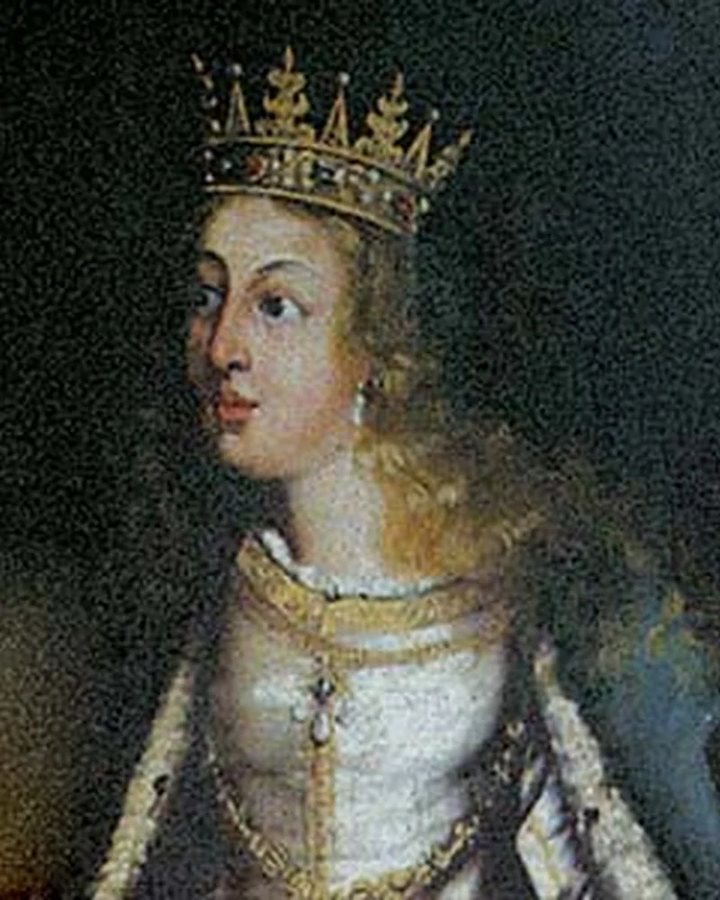 Elizabeth of AragonSaint · 1271–1336Saint. Feast day: 4 July.
 Zilda Arns1934–2010Zilda Arns was a Brazilian pediatrician and humanitarian who dedicated her life to improving public health in impoverished communities. Born in 1934, she founded the Pastoral da Criança (Pastoral Care for Children), a massive Catholic social action program that significantly lowered infant mortality rates through nutrition and sanitation initiatives. Her extensive work also extended to supporting the elderly. She died in 2010 in Port-au-Prince while performing humanitarian duties during the earthquake that struck Haiti.
 Thurgood MarshallSaint · 1908–1993Saint. Feast day: 17 May.
 Amelia Bloomer1818–1894Amelia Bloomer was an influential American feminist, journalist, and suffragist who lived from 1818 to 1894. Born in Homer, New York, she became a prominent figure in the early women's rights movement, participating in the landmark 1848 Seneca Falls Convention. Through her work as an editor and writer, she advocated for gender equality and social reform. She is widely recognized for her role in promoting dress reform, which significantly influenced women's fashion and personal freedom during the nineteenth century.
 Chiara LubichServant of God · 1920–2008Chiara Lubich was an Italian teacher and author who established the Focolare Movement to foster universal brotherhood and unity. Born in Trento in 1920, she developed her spiritual convictions during the hardships of the Second World War. Her philosophy centered on the idea that love could heal social divisions and bring people together. Through her leadership, the movement grew from a small group of companions into a global community dedicated to ecumenical, interreligious, and intercultural dialogue.
 Frances Perkins1882–1965Writer. Feast day: 13 May.
 Olaudah Equiano1745–1797Olaudah Equiano was a prominent writer and abolitionist who lived in the late 18th century. Born in West Africa (modern-day Nigeria) around 1745, he was kidnapped as a child and sold into slavery in the Americas. After serving various masters and eventually purchasing his own freedom in 1766, he moved to Great Britain. There, he became a leading figure in the movement to end the slave trade, using his personal experiences to advocate for human rights and democratic reform through his influential published memoirs.
