 Philip the ApostleSaint · 5–80Philip the Apostle was a first-century disciple of Jesus and one of the Twelve Apostles. Originally from Bethsaida, he is identified in the New Testament as the individual who introduced Nathanael to Christ. Following the resurrection, he traveled extensively as a missionary, preaching throughout regions such as Greece, Syria, and Asia Minor. Christian traditions vary regarding his death, noting that he may have been martyred in Hierapolis either by beheading or through crucifixion, often alongside Bartholomew.
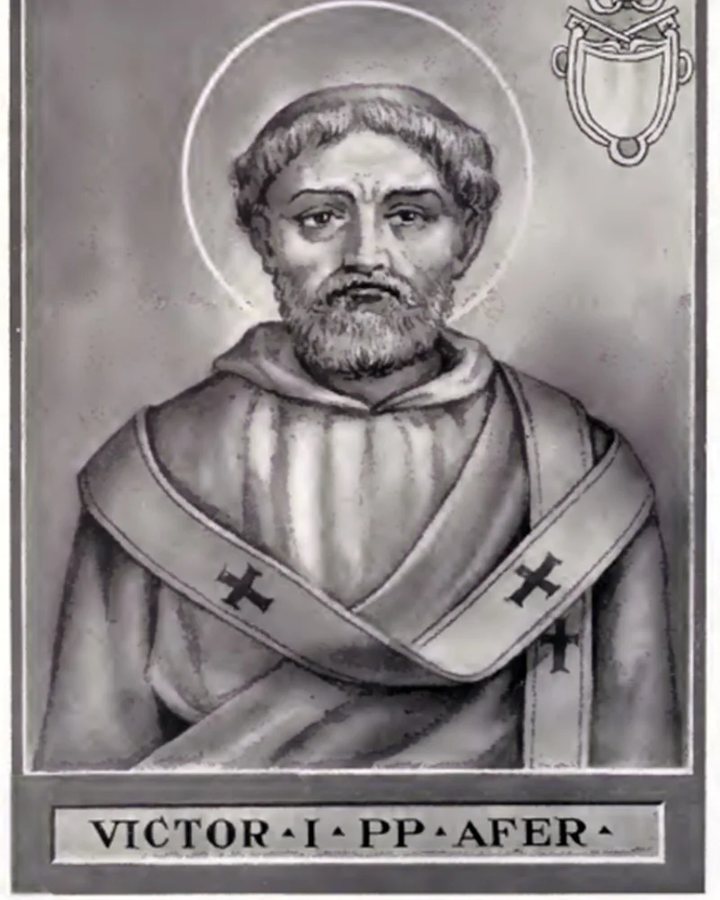 Victor ISaint · †199Victor I was a late second-century prelate of Berber origin from the Roman Province of Africa who served as the Bishop of Rome. While historical sources provide varying dates for his tenure, he is generally believed to have held the office between 189 and 199. He is primarily remembered for his strict stance regarding liturgical practices, specifically his decision to break communion with certain Eastern churches over differences in the calculation of Easter.
 Louis IX of FranceSaint · 1214–1270Louis IX of France was a medieval monarch who ruled his kingdom from 1226 until his death in 1270. Born in Poissy, he ascended to the throne at age twelve under the regency of his mother, Blanche of Castile. He is recognized as the only French king to be canonized as a saint. His reign is noted for significant legal reforms and territorial expansion, though it ended during the Eighth Crusade in Tunis, where he died from dysentery.
 CyprianSaint · 200–258Cyprian was a third-century bishop of Carthage and a significant early Christian author of Berber descent. Born into a wealthy Roman African family, he was originally a prominent orator and teacher of rhetoric before converting to Christianity in his mid-thirties. Following his baptism, he rose quickly through the clergy to become the leader of the church in Carthage. He is widely recognized for his influential Latin theological writings and his decisive leadership during periods of intense persecution and internal ecclesiastical disputes.
 Fulgentius of RuspeSaint · 468–533Fulgentius of Ruspe was a 5th and 6th-century Christian prelate and theologian who served as the Bishop of Ruspe in modern-day Tunisia. Born into a senatorial family in Thélepte, he initially worked as a tax collector before choosing a monastic life. He became a prominent defender of Nicene orthodoxy against Arianism, often facing exile or persecution under Vandal rule. A prolific writer and teacher, he is remembered for his intellectual contributions to early church doctrine and his commitment to reforming his diocese.
 Donatus Magnus250–355Donatus Magnus was a fourth-century bishop in North Africa who established the Donatist movement. Born around 250, he rose to prominence following the Diocletianic Persecution, a period when many clergy surrendered sacred texts to Roman authorities. Donatus led a faction that believed such individuals, known as traditores, had forfeited their spiritual legitimacy. This theological disagreement led to a significant schism within the North African church, as Donatus contested the validity of ordinations performed by those who had compromised during the persecutions.
 Julia of CorsicaSaint · 420–450Julia of Corsica was a 5th-century Carthaginian woman who became a Christian martyr while living in Corsica under Roman rule. Following the Vandal conquest of Carthage, she was reportedly taken into service by a merchant named Eusebius. While stationed at Cap Corse, her refusal to participate in pagan sacrifices led to a confrontation with a local magistrate named Felix. Because of her steadfast faith and subsequent death, she is recognized as a saint in several Christian traditions, including the Catholic, Orthodox, and Anglican churches.
 Saint AureliusSaint · 301–430Aurelius of Carthage was a 4th-century Christian bishop who led the church in Carthage from approximately 391 until his death around 430. A close associate of Augustine of Hippo, he acted as a patron to the future saint, providing financial support for the establishment of a monastic community. This monastery served as a training ground for future clergy. During his leadership, he played a significant role in organizing ecclesiastical councils to define doctrine and discipline within the African church.
 Epenetus of CarthageSaint · 1–100Epenetus of Carthage was a first-century priest and an early Christian disciple. Born in Ephesus, he is recognized as one of the seventy disciples mentioned in the Epistle to the Romans. In this biblical text, the apostle Paul refers to him as a beloved figure and notes that he was the initial convert within the Province of Asia. Some historical traditions suggest he served as the first bishop of Carthage or Cartagena.
 QuodvultdeusSaint · 400–454Quodvultdeus was a fifth-century bishop of Carthage and a notable Church Father. Born in Carthage around 400, he served as a deacon before ascending to the episcopacy. He maintained a close relationship with Augustine of Hippo, who acted as his spiritual mentor and dedicated several writings to him. Following the Vandal conquest of North Africa, he was forced into exile in Naples, where he lived until his death around 454. During his time in Italy, he worked to convert many Arian Goths to the Catholic faith.
- VVictor of VitaSaintVictor of Vita was a 5th-century bishop and historian from the African province of Byzacena. Born around 430, he is primarily remembered for his detailed historical accounts of the religious conflicts in North Africa. His writings provide essential insights into the period when Vandal kings, specifically Genseric and Huneric, ruled the region. Through his work, he documented the struggles of Nicene Christians against Arian Vandal authorities, making him a vital source for understanding the social and liturgical landscape of late antique Africa.
 Olivia de PalermoSaint · 448–463Olivia de Palermo was a 5th-century Christian consecrated virgin born into a noble Sicilian family. According to tradition, she lived in Palermo before being sent to Tunis by the Vandals. There, she faced martyrdom through beheading, dying on June 10, 463. She is recognized as a saint and serves as a patroness of Palermo, a role officially established in 1606. Her life and death are commemorated in various Christian traditions, including Catholic, Orthodox, and Anglican.
 RestitutaSaint · 200–304Restituta was a Berber saint and martyr who lived during the Roman era. Born in the region of Bizerte, she eventually settled in Carthage. She is remembered for her death during the persecutions led by the Roman Emperor Diocletian. According to tradition, she survived a fire occurring on a blazing boat and was subsequently led by an angel to the island of Ischia.
 Pontius of CarthageSaint · †300Pontius of Carthage was a third-century Christian deacon and Latin author who lived in Roman North Africa. Serving under Bishop Cyprian, he accompanied his mentor into exile at Curubis. He is primarily known for composing the *Vita Cypriani*, a significant biographical work detailing the life and eventual martyrdom of Cyprian. His writing, which combines personal observations with contemporary records, serves as a vital historical and apologetic account of the bishop's experiences and the challenges faced by the early Church in Carthage.
 Juvenal of NarniSaint · 340–376Juvenal of Narni was a 4th-century bishop who served as the first leader of the church in Narni, Italy. Born in Carthage, he was reportedly ordained by Pope Damasus I. While historical records of his life are sparse, he is recognized as a confessor in several traditions. Some historical accounts, including writings by Gregory the Great, have referred to him as a martyr, a title sometimes applied to bishops regardless of the specific circumstances of their death.
- GGaudiosus of NaplesSaint · 350–455Gaudiosus of Naples, also known as Gaudiosus the African, was a 5th-century bishop originally from Abitina in Roman Africa. Following the persecutions led by the Vandal king Genseric, he escaped North Africa by boat. He arrived in Naples around 439 AD alongside several other exiled clergy, including the bishop of Carthage. After settling on the city's acropolis, he became a significant religious figure in the region, helping to shape the local monastic and liturgical traditions.
- MMarcellinus of CarthageSaint · 350–413Marcellinus of Carthage was a Roman military tribune and secretary of state who served under Emperor Honorius. Born in Toledo, Spain, he was a cultured aristocrat with a deep interest in theology. He maintained close friendships with prominent religious figures, including Saint Jerome and Augustine of Hippo, to whom he was a frequent correspondent. While presiding over the Council of Carthage in 411, he ruled against the Donatists, enforcing imperial policy that declared them heretics. His involvement in these religious and political disputes eventually led to his death in 413.
- DDeogratias de CarthageSaint · 350–457Deogratias de Carthage was a North African prelate who served as the Bishop of Carthage between 454 and 457. Following the Vandal conquest of the city in 439, the episcopal seat had remained vacant for fourteen years because the previous bishop, Quodvultdeus, had been exiled and local priests were imprisoned by King Genseric. His name, which translates as "thanks be to God," was a common Catholic salutation used in Africa to differentiate themselves from the Donatist movement.
 FelicitySaint · 200–203Felicity was a Christian martyr living in Carthage during the early third century. A pregnant enslaved woman, she was arrested alongside the noblewoman Perpetua and several others, including two free men and one enslaved man. These individuals, who were catechumens at the time of their arrest, were executed during military games held to celebrate the birthday of Caesar Geta. Felicity is recognized as a saint in the Catholic, Orthodox, and pre-schism traditions.
 Eugenius of CarthageSaint · 450–505Eugenius of Carthage was a Christian bishop who led the see of Carthage starting in 480. Living during the era of Vandal rule in North Africa, he was a prominent figure in the theological conflicts between mainstream Christianity and Arianism. Despite facing significant political opposition from Vandal kings, he remained a steadfast defender of his faith. His leadership and commitment to his doctrines led to multiple periods of exile, eventually resulting in his death in Vienne, near Albi, in 505.
 PerpetuaSaint · 180–203Perpetua was a noblewoman and early Christian martyr from Carthage who lived during the early third century. A mother to an infant son, she was executed in the Roman province of Africa around 203. She is widely recognized for her written account of her imprisonment and death, which provides a rare first-person perspective of a martyr's experience. Along with several others, including the slave woman Felicity, she was put to death during military games held to celebrate the birthday of Caesar Geta.
 Anthony NeyrotBlessed · 1425–1460Anthony Neyrot was a 15th-century Italian Dominican priest who was later recognized as a blessed martyr. Born in Rivoli, he studied in Florence under Antoninus of Florence before serving in Sicily and Naples. During a sea voyage to Naples, he was captured by Barbary corsairs and taken to North Africa. After initially renouncing his Catholic faith to secure better treatment while in Tunis, he eventually decided to return to his original religious convictions, which led to his execution.
- TThalassius of LibyaVenerable monastic · †648Thalassius of Libya was a 7th-century monk and abbot who lived in the Libyan desert. As a respected spiritual leader, he maintained a close relationship with Maximus the Confessor, who dedicated a book of scriptural explanations to him. Thalassius is primarily recognized for his theological writings, which addressed complex topics such as the incarnation of Christ and the sanctification of all creation. His insights into the Holy Spirit were likely derived from earlier patristic traditions, and his ideas later influenced the work of John Damascene.
- AAbadiosSaint · †400Abadios was a Christian martyr who lived during the late 4th century. Originally from Bilgai in Egypt, he served as a soldier in the military. During the reign of Emperor Diocletian, he declared his faith in Jesus Christ while at Khalakhis. As a consequence of his religious convictions, he was executed by being thrown against a rock.
- SSaturninus of CarthageSaint · 201–304Saturninus of Carthage was a North African bishop and martyr who lived during the early 4th century. Originally from Carthage, he was subjected to torture on a rack during the Decian persecution. Following this, he was sent into exile in Rome. While in the imperial city, he reportedly converted the tyrant Gratian to Christianity before facing execution. He died in 304, having been beheaded, an event recorded in inscriptions by Pope Damasus I.
 Felix of ThibiucaSaint · 247–303Felix of Thibiuca was a Christian bishop living in North Africa during the late third and early fourth centuries. He is recognized as a martyr who died in 303 during the Great Persecution initiated by the Roman emperor Diocletian. While serving his community, he reportedly refused to hand over sacred Christian scriptures to a local magistrate named Magnillian. He was executed alongside four companions, including Audactus, Fortunatus, Januarius, and Septimus.
 Saint AemilianusSaint · †484Saint Aemilianus was a 5th-century physician from Africa who is recognized as a martyr and confessor. During the rule of the Vandal King Huneric, he faced intense religious persecution stemming from the king's Arianism. Because he refused to convert to the Arian faith, he was executed through the brutal method of being flayed alive. He is remembered for his steadfastness in his Christian beliefs during this period of conflict.
 Saint CaniusHieromartyr · 201–300Saint Canius was a third-century bishop and hieromartyr born in Carthage. During the Diocletianic Persecution, he refused to worship idols or acknowledge the divinity of the emperor, leading to his imprisonment and torture. Despite these hardships, he continued to preach the Gospel, converting many followers through his endurance. After escaping execution during a violent storm and earthquake, he eventually settled in Atella to preach and live as a hermit, where he died in his old age.
- LLaetus of Nepta†484Laetus of Nepta was a 5th-century Christian bishop and martyr who lived within the Vandal Kingdom in North Africa. Serving as the bishop of Nepta, located in the region of Byzacena, he faced persecution during the reign of King Huneric. Following a period of difficult imprisonment, he was executed by being burned alive in Carthage in 484. His life and death are recorded in historical accounts of the era, marking him as a significant figure of Nicene Christianity during the Vandal period.
- PPia of CarthageSaintPia of Carthage was an early Christian martyr who lived during the late 3rd or early 4th century. She resided in Carthage, which is located near modern-day Tunis in northern Tunisia. Alongside Saint Picaria and thirty-eight other Christians, she was executed for her faith around the year 300. Historical accounts suggest that the group may have been martyred through crucifixion.
