 Thomas MoreSaint · 1478–1535Thomas More was a prominent 16th-century English statesman, lawyer, and humanist who served as Lord Chancellor under King Henry VIII. A scholar of significant repute, he authored the influential work *Utopia*, which explored the concept of an ideal island society. Despite his high political standing, More remained a devout Catholic, eventually facing execution at Tower Hill after refusing to acknowledge the King as the supreme head of the Church of England. His refusal to swear the Oath of Supremacy led to a conviction for treason, resulting in his death in 1535.
 Martin Luther King Jr.1929–1968Martin Luther King Jr. (1929–1968) was an American civil rights activist and Baptist minister who led the civil rights movement from 1955 until his assassination in 1968. He worked to end legalized discrimination, especially the Jim Crow laws that mostly affected African Americans, using nonviolence and sometimes civil disobedience. King helped lead marches for voting rights, desegregation and labor rights, and he delivered his "I Have a Dream" speech at the 1963 March on Washington. He won the 1964 Nobel Peace Prize.
 Saint GeorgeWonderworker · 275–303Saint George was a 4th-century Christian martyr and soldier of Cappadocian Greek descent. Serving as a member of the Praetorian Guard during the Roman Empire, he was executed for refusing to renounce his faith during the persecutions under Emperor Diocletian. He is widely recognized as a thaumaturge and a prominent military saint. While historical details of his life remain sparse, his legacy as a courageous defender of faith has made him one of the most celebrated figures in Christian tradition.
 Bartholomew the ApostleSaint · 100 BC–100Bartholomew the Apostle was a first-century presbyter and one of the twelve apostles of Jesus. Often identified with Nathanael, his name is derived from Aramaic, meaning the son of Tolmai. He is recognized for his extensive missionary work across various regions, including India and Armenia. According to tradition, he played a vital role in spreading the Christian faith, eventually facing martyrdom in Albanopolis, where he was executed for his religious convictions.
 Sixtus IISaint · 215–258Sixtus II was a mid-third-century pope who led the Catholic Church from 257 until his death in 258. Born in Greece, he worked to mend fractured relationships between the Roman church and various Eastern and African communities. During the reign of Emperor Valerian, he became a target of intense religious persecution. He was ultimately executed in Rome by beheading, a death he shared with several of his deacons, including the well-known Lawrence of Rome.
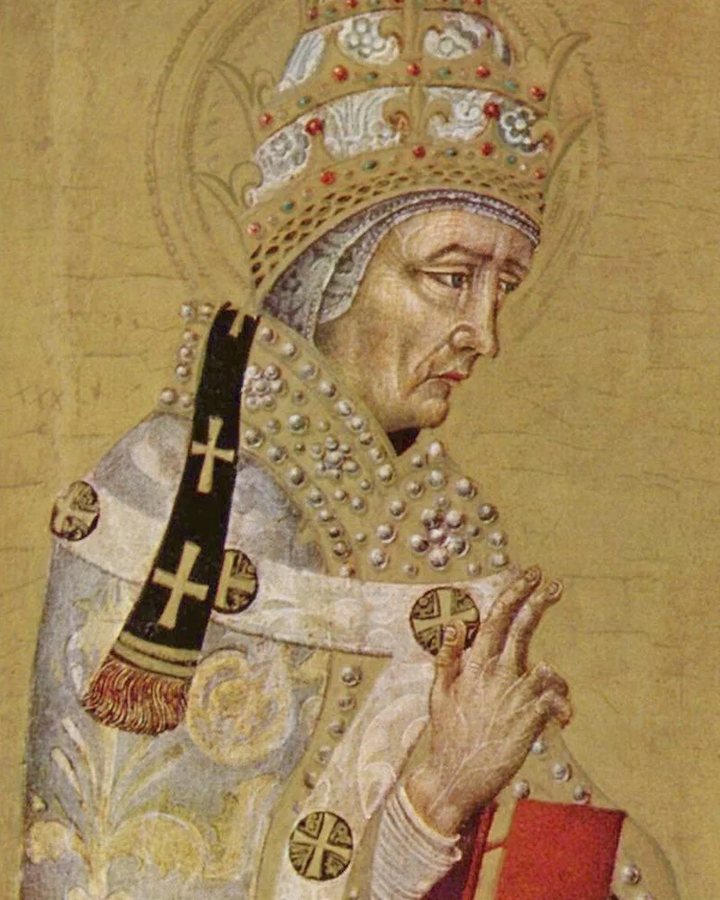 FabianHieromartyr · 200–250Fabian was a Roman bishop who served as the head of the Catholic Church from 236 until 250. According to historical accounts, his election was marked by a miraculous sign when a dove reportedly descended upon him during the selection process. During his fourteen-year papacy, he worked to resolve internal church schisms and organized the Christian community in Rome into distinct districts. He is remembered as a hieromartyr, having died during the persecutions initiated by Emperor Decius.
 Saint StephenWonderworker · 1–36Saint Stephen was a first-century deacon in the early Christian community of Jerusalem. Identified as one of the seven deacons appointed to manage food distribution for widows, he is traditionally honored as the protomartyr, or the first person to die for the Christian faith. According to the New Testament, his preaching caused significant friction with local synagogue members, leading to his trial before the Sanhedrin. Following a speech regarding Israelite history, he was executed by stoning, an event witnessed by Saul of Tarsus, who later became the Apostle Paul.
 Thomas BecketSaint · 1119–1170Thomas Becket was a 12th-century English statesman and cleric who served as Lord Chancellor before becoming the Archbishop of Canterbury. Born in London, he rose through the ecclesiastical ranks under Archbishop Theobald of Bec, eventually gaining the favor of King Henry II. However, his appointment as archbishop led to a significant confrontation with the monarch regarding the legal privileges of the Church. This struggle resulted in a period of exile and ultimately led to his violent death within Canterbury Cathedral.
 Ignatius of AntiochHieromartyr · 35–108Ignatius of Antioch was an early Christian bishop and theologian who served as the Patriarch of Antioch during the late 1st or early 2nd century. Also known as Theophorus, he is recognized as one of the most significant Apostolic Fathers. While being transported to Rome to face execution, he composed several letters that remain vital sources for early Christian theology, specifically regarding the role of bishops, the sacraments, and ecclesiology. He is honored as a hieromartyr for his death in Rome under the reign of Trajan.
 PontianSaint · †235Pontian was the bishop of Rome from 230 to 235. A Roman citizen and son of Calpurnius, he led the Church during a period that transitioned from the tolerance of Emperor Severus Alexander to the harsh persecutions of Maximinus Thrax. Following his arrest, he was exiled to the island of Sardinia, where he eventually died. He is historically significant for being the first pope to resign his office, an act intended to facilitate a smooth leadership transition and resolve a long-standing schism.
 Stephen IHieromartyr · †257Hieromartyr, pope. Feast day: 2 August.
 IrenaeusHieromartyr · 130–202Irenaeus was a second-century Greek bishop who served in Lugdunum, the city known today as Lyon. Born in Smyrna, he was a student of Polycarp and played a vital role in shaping early Christian theology. He is most famous for his efforts to defend orthodox beliefs against various Gnostic interpretations of scripture. By emphasizing the importance of apostolic tradition and the four canonical gospels, he helped establish foundational theological frameworks that guided the growing Christian communities in Gaul and beyond.
 CorneliusSaint · 180–253Cornelius was the bishop of Rome from 251 to 253, serving during a turbulent era of Roman persecution. He led the church through a significant schism regarding how to reintegrate members who had performed pagan sacrifices to avoid death. While the Novatianists argued these individuals should be permanently excluded, Cornelius advocated for their readmission through penance. His leadership helped stabilize the Roman church, which at the time supported a vast community of clergy and those in need.
 Alexander IHieromartyr · 100–116Alexander I was a Roman bishop who served as Pope from approximately 107 to 116. Born in Rome, he led the early Church during the second century. While the exact dates of his reign are subject to historical debate, he is traditionally recognized as a hieromartyr who may have died for his faith under the rule of emperors such as Trajan or Hadrian. He is honored in the Catholic, Orthodox, and Anglican traditions.
 Saint LucyHieromartyr · 283–304Saint Lucy was a Christian martyr who lived in Syracuse during the late third and early fourth centuries. Born around 283, she died in 304 during the Diocletianic Persecution. As a prominent virgin martyr, she is recognized for her faith under the Roman Empire. Her memory has been preserved through various Christian traditions, including Catholic, Orthodox, and Anglican practices, where she remains a significant figure of devotion.
 PolycarpHieromartyr · 69–155Polycarp was a second-century Christian bishop of Smyrna who is recognized as one of the primary Apostolic Fathers. Having been a disciple of the Apostle John, he served as a vital link between the original apostles and the early church. He is remembered for his steadfast faith, which led to his martyrdom when he refused to renounce his beliefs. He is venerated as a saint and Church Father in several traditions, including the Catholic, Eastern Orthodox, Anglican, and Oriental Orthodox churches.
 Martin ISaint · 598–655Martin I was the Bishop of Rome from 649 to approximately 654. Originally serving as a papal legate in Constantinople, he was elected to the papacy without seeking the customary approval from the Byzantine emperor. He is primarily remembered for his firm stance against Monothelitism, a theological doctrine supported by the imperial court. This opposition led to his arrest by Emperor Constans II, his subsequent imprisonment, and his eventual exile to Cherson, where he died in 655. He is recognized as a saint in the Catholic, Orthodox, and Anglican traditions.
 Catherine of AlexandriaGreat martyr · 287–305Catherine of Alexandria was a 4th-century Christian missionary and scholar living in Alexandria during the Roman Empire. According to hagiographical tradition, she was a princess who converted to Christianity in her youth and used her intellect to defend the faith. She is famously remembered for debating pagan philosophers and successfully converting many to her belief. Following her refusal to renounce her faith to the emperor Maxentius, she was executed, earning her the title of a great martyr.
 Saint SebastianSaint · 255–287Saint Sebastian was a 3rd-century Roman military officer and Christian martyr. Born in Narbonne, he rose to the rank of captain within the Praetorian Guard under the emperors Diocletian and Maximian. While he initially hid his religious convictions, he eventually used his position to convert many others to Christianity. His life is defined by two distinct martyrdoms: first, surviving an execution attempt by archers, and later, being beaten to death by the emperor after confronting him about his persecutions.
 Justin MartyrSaint · 100–165Justin Martyr was a second-century philosopher and theologian born in Nablus. After exploring various schools of thought, including Stoicism, Peripateticism, and Pythagoreanism, he eventually embraced Platonism. His life changed significantly following a conversation with an elderly man who introduced him to the teachings of the prophets. This encounter led him to renounce his previous beliefs and dedicate himself to Christianity, which he viewed as the true philosophy. He eventually moved to Rome, where he established a school and became a prominent defender of the faith.
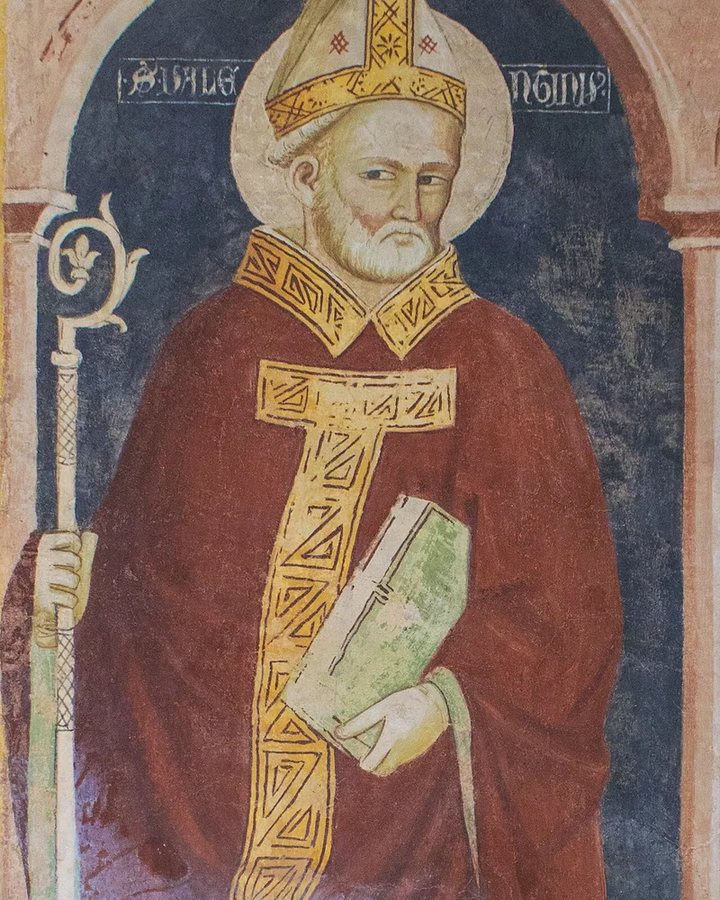 Saint ValentineHieromartyr · 175–273Saint Valentine was a third-century clergyman, identified as either a priest or a bishop, who lived during the Roman Empire. Born in Terni, he is widely recognized as a hieromartyr who was executed in Rome on February 14. While historical accounts vary regarding his specific role and the exact number of individuals sharing his name, he is most commonly remembered for his service to persecuted Christians. His legacy has become deeply intertwined with traditions of love, leading to his widespread commemoration in various Christian denominations.
 Maximilian KolbeSaint · 1894–1941Maximilian Kolbe was a Polish Conventual Franciscan priest and missionary who lived from 1894 to 1941. He is widely recognized for his devotion to the Virgin Mary and his extensive work in religious publishing and radio. During World War II, he was imprisoned in the Auschwitz concentration camp, where he famously volunteered to die in place of a fellow prisoner. This act of self-sacrifice led to his martyrdom. He was later canonized by Pope John Paul II, who described him as a patron for the difficult twentieth century.
 Lawrence of RomeHieromartyr · 225–258Lawrence of Rome was a third-century deacon and hieromartyr who served under Pope Sixtus II. Born in Osca, he traveled to Rome and was appointed archdeacon, a role that involved managing the church's treasury and distributing alms. During the persecutions led by Emperor Valerian in 258, he was targeted alongside other clergy. He is famously remembered for his defiant response to Roman authorities regarding the church's wealth and his subsequent death, which has become a central part of his hagiography.
 Saint ChristopherSaint · †251Saint Christopher was a third-century martyr whose life is defined by legendary accounts. Born in Canaan, he is said to have lived and died in Anatolia. His name, derived from the Greek for "Christ-bearer," was reportedly adopted following his conversion to Christianity. While historical evidence for his existence is debated, early records from the mid-fifth century indicate his veneration was already established in Asia Minor. He is widely recognized across various Christian traditions, including Catholic, Orthodox, Anglican, and Oriental churches.
 Agnes of RomeSaint · 300–304Agnes of Rome was a young Christian woman from a noble Roman family who lived during the late 3rd and early 4th centuries. During the reign of Emperor Diocletian, she was executed for her religious convictions at approximately twelve or thirteen years of age. Following her refusal to renounce her faith, she faced various forms of persecution before being beheaded. She is recognized as a saint across several Christian traditions, including the Catholic, Eastern Orthodox, Oriental Orthodox, Anglican, and Lutheran churches.
 Thomas CranmerSaint · 1489–1556Thomas Cranmer (1489–1556) was an influential English theologian and a central figure in the English Reformation. Serving as the Archbishop of Canterbury from 1533 to 1555, he played a vital role in the separation of the English Church from the Roman Catholic Church. He provided theological support for King Henry VIII's annulment from Catherine of Aragon and later established the liturgical foundations of the reformed Church of England. Recognized as a saint and martyr, his liturgical contributions shaped the religious identity of the Anglican tradition.
 Dietrich Bonhoeffer1906–1945Dietrich Bonhoeffer was a German Lutheran pastor and theologian who became a prominent figure of resistance against the Nazi regime. Born in 1906, he was a founding member of the Confessing Church, which opposed the Nazification of Protestantism. His theological work, including the classic *The Cost of Discipleship*, examined the relationship between faith and the secular world. After being arrested by the Gestapo for his involvement in efforts to save Jewish lives, he was eventually executed at the Flossenbürg concentration camp in 1945.
 Edith SteinVenerable monastic · 1891–1942Edith Stein was a German philosopher and Catholic nun who converted from Judaism to Christianity. Born in Wrocław in 1891, she became a student of phenomenology and worked as a university teacher and translator. Following her conversion, she joined the Order of Discalced Nuns of the Blessed Virgin Mary of Mount Carmel, taking the religious name Teresa Benedicta of the Cross. Due to Nazi persecution of individuals with Jewish ancestry, she was arrested and eventually murdered in the gas chambers of the Auschwitz II-Birkenau concentration camp in 1942.
 Edward the MartyrPassion bearer · 962–978Edward the Martyr was an English monarch who reigned from 975 until his death in 978. As the firstborn son of King Edgar, his accession followed a period of political tension between competing noble factions regarding the succession. His brief rule ended abruptly when he was murdered in the Purbeck Hills, specifically at the Gap of Corfe. Although contemporary accounts leave the identity of his killer uncertain, historical narratives have frequently pointed toward his stepmother or the supporters of his half-brother, Æthelred.
 Agatha of SicilyHieromartyr · 235–261Agatha of Sicily was a 3rd-century Christian virgin and martyr who lived in Catania, located in the Roman province of Sicily. During the Decian persecution, she refused the romantic advances of the local Roman prefect, Quintianus, due to her vow of virginity. Following her refusal, she faced severe torture and imprisonment for her faith. She is remembered as a symbol of steadfast devotion and is one of the virgin martyrs named in the Canon of the Mass.
