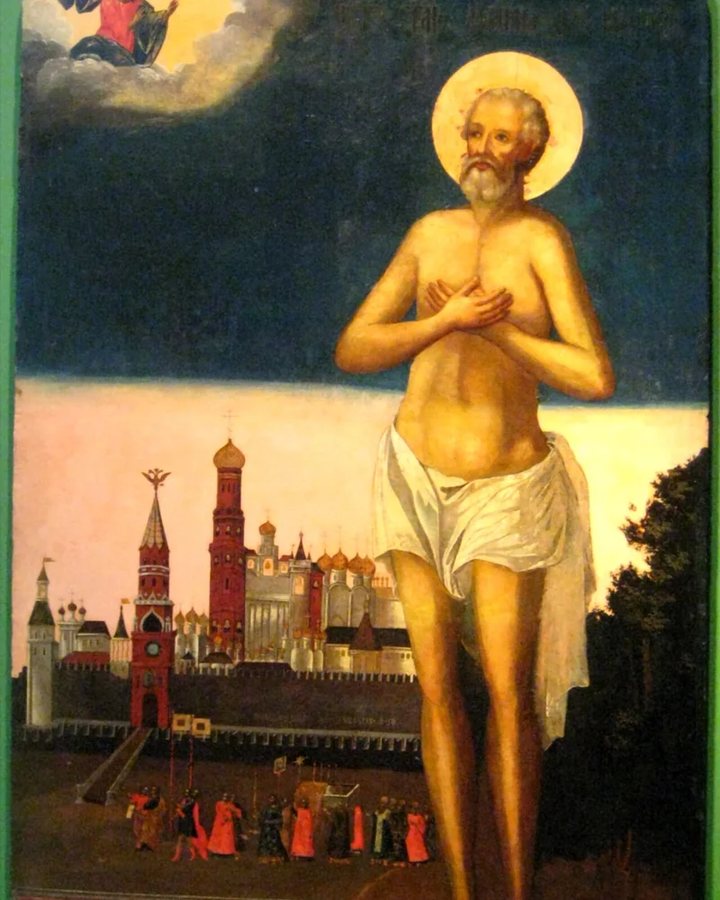
 Basil Fool for ChristWonderworker · 1468–1552Basil Fool for Christ was a 16th-century Russian holy man, known for his lifestyle of extreme poverty and intentional foolishness. Born in Moscow to a family of serfs, he lived as a *yurodivy*, often appearing naked or wearing heavy chains. He dedicated his life to supporting the impoverished, specifically assisting those too proud to beg for themselves. Recognized for his prophetic abilities, he famously criticized Tsar Ivan the Terrible for his conduct during religious services.
 Xenia of Saint PetersburgSaint · 1719–1803Xenia of Saint Petersburg was an 18th-century Russian religious figure who lived in Saint Petersburg. Following the death of her husband, Andrey Petrov, a cathedral chanter, she distributed her entire wealth to the impoverished. For the next 45 years, she lived as a holy fool, wandering the city streets while wearing her late husband's military uniform. She is recognized as a patron saint of the city and is honored in both Orthodox and Catholic traditions.
 Simeon the Holy FoolVenerable monastic · 522–588Simeon the Holy Fool was a sixth-century Christian monk and hermit of Byzantine-Syrian origin. After spending nearly three decades practicing asceticism in the desert near the Dead Sea, he moved to Emesa to engage in charitable work. To avoid receiving recognition for his many acts of kindness, he intentionally behaved in a seemingly irrational or indecent manner. This practice of simulating madness to remain humble led to his reputation as one of the earliest examples of a "fool for Christ."
 Andrew of ConstantinopleSaint · 860–936Saint. Feast day: 28 May.
 Procopius of UstyugWonderworker · 1300–1303Procopius of Ustyug was a merchant from Lübeck who lived as a fool for Christ. Originally a Roman Catholic, he converted to Eastern Orthodoxy while traveling. He is recognized as a wonderworker, having reportedly predicted a meteorite strike, a tornado, and a fire near Veliky Ustyug in 1290. He died in 1303, and his life as a holy fool is celebrated within the Eastern Orthodox tradition.
 Michael of KlopskVenerable monastic · †1453Michael of Klopsk was a Russian Orthodox monk and a holy fool who lived during the 15th century. He was associated with the Holy Trinity Monastery, located near Novgorod on the Veryazha river. Historical accounts suggest he may have been a descendant of Dmitry Mikhailovich Volyn-Bobrok and Anna Ivanovna. During the Muscovite–Lithuanian Wars, he lived as an anonymous figure at the monastery before being identified by Prince Konstantin Dmitrievich in 1413. He is recognized as a saint within the Eastern Orthodox tradition.
 Blessed John of Moscow the Fool-For-ChristWonderworker · †1589John of Moscow was a 16th-century Russian saint born near Vologda who lived as a fool-for-Christ. After working as a water-carrier and laborer in a saltworks, he moved to Rostov to practice holy foolishness. He lived in Moscow, where he often appeared barefoot or nearly naked despite the intense cold. Known for his blunt honesty, he reportedly spoke truth to powerful figures, including the Czar Boris Godunov, and predicted future calamities for the nation.
 Nicholas Salos of PskovSaint · 1501–1576Nicholas Salos of Pskov was a Russian holy fool, known as a yurodivy, who lived in the 16th century. Born around 1501, he is most famous for his courageous intervention during a military siege in 1570. When Tsar Ivan the Terrible targeted Pskov due to suspicions of treason, Nicholas confronted the monarch directly. By rebuking the ruler for his violent actions, he is credited with preventing a massive massacre of the city's population.
 Euphrosinia KolyupanovskayaSaint · 1758–1855Saint, monk. Feast day: 3 July.
- AAndrew of TotmaSaint · 1638–1673Andrew of Totma was a seventeenth-century religious figure within the Russian Orthodox Church. Born in the countryside near the town of Totma, he was named after Saint Andrew Stratelates. Following the example found in the Gospels, he departed from his parents to live in desolate areas. After discovering that his parents had passed away, he traveled from Ust-Tolshma to reside at the Monastery of Galic. He eventually became a holy fool, also known as a yurodivy, before settling in Totma.
 John the HairySaint · †1581John the Hairy was a sixteenth-century holy fool, also known as John the Merciful, who lived in Rostov Veliky. He was recognized for his ascetic lifestyle, characterized by constant prayer and profound humility. During his life, he faced numerous hardships and lacked a permanent home, often finding temporary shelter with elderly widows or at the residence of his spiritual mentor. He is remembered for his spiritual influence on others, including the hermit Irenarchus, through his patient and dedicated devotion.
 Thaddeus of PetrozavodskSaint · †1726Thaddeus of Petrozavodsk was an 18th-century Russian Orthodox saint who lived as a holy fool. Originally from the Olonets region, he settled near the Olonets Petrovsky plants in 1706. He was known for his ascetic lifestyle and for protecting the poor from official corruption. According to tradition, he once predicted the approaching death of Emperor Peter the Great, an event that led to his temporary imprisonment before the monarch eventually ordered his release and support.
 Isidoro di RostovWonderworker · †1474Isidoro di Rostov was a 15th-century holy fool and wonderworker originally born near Brandenburg to a Slavic Catholic family. After choosing a life of asceticism, he traveled on foot to Rostov, where he converted to Orthodoxy. Known as Tverdislov due to his accurate prophecies, he lived a simple life in a small hut. He died in 1474 and was buried at the site of his dwelling, which later became the location of the Church of the Ascension.
 Maxime de MoscouSaint · †1434Maxime of Moscow was an Orthodox saint recognized for his life as a holy fool. Living during a period of Tatar raids in Russia, he provided comfort to the destitute while publicly criticizing wealthy merchants and the Moscow nobility. He passed away in Moscow on November 11, 1434, and was buried near the wooden church dedicated to the princes Boris and Gleb, located close to the Kremlin.
- MMaxime de TotmaSaintMaxime de Totma was an Orthodox priest who lived in the Totma region during the 17th century. Born into a priestly family, he served at the Resurrection Church near Varnitsy before dedicating himself to the ascetic life of a holy fool. For forty-five years, he practiced constant prayer, fasting, and nudity, intentionally neglecting physical comforts. He passed away in old age on January 16, 1650, and was later canonized by the Russian Orthodox Church.
 Prokop Wiacki1578–1627Prokop Wiacki was a 17th-century orthodox saint known for his life as a holy fool. Born in 1578 near Khlynov (modern-day Kirov), he suffered mental impairment following a lightning strike in 1590. After being healed by Saint Tryphon at the Assumption Tryphon Monastery, he eventually embraced a life of wandering and holy folly. He is remembered for his prophetic abilities, which included foretelling illnesses, deaths, fires, and changes in taxation.
- FFeofilVenerable monastic · 1788–1853Feofil was a 19th-century Orthodox hieromonk and ascetic known for living as a fool for Christ. Born Foma Gorenkovsky in Makhnivka, he experienced a difficult childhood, including being orphaned at age seven. After wandering for some time, he entered the Kyiv-Bratksy Monastery to study, eventually becoming a monk and later receiving the great schema. He lived a life of extreme asceticism and was recognized for his prophetic abilities and miraculous deeds during his time at the Kyiv-Pechersk Lavra.
 Mark of AthensSaintMark of Athens was a late 3rd to early 4th-century hermit and holy fool born in Athens. After studying philosophy, he sought solitude in the Ethiopian desert, living in a cave on Mount Phraki. For ninety-five years, he lived in isolation, enduring extreme physical hardships before receiving divine grace. He is remembered for his profound spiritual strength and the miracles he performed, such as moving a mountain through faith, which he demonstrated to the monk Serapion.
- GGalaktion BelozerskiySaint · †1506Galaktion Belozerskiy was a Russian saint and holy fool who lived in the Ferapontov Monastery. A former soldier from the Belozersky region, he became a monk and a devoted disciple of Martinian of Belozersky. Following his mentor's blessing, he practiced the life of a holy fool, a path characterized by spiritual wisdom and prophetic foresight. He served as the abbot of his monastery for thirty years until his death in 1506.
- VVarvara SkvorchikhinskayaSaint · 1890–1966Varvara Skvorchikhinskaya (1890–1966) was an Orthodox saint, holy fool, and recluse from the village of Skvorchikha. Born into a family of rural clergy, she trained as a teacher and worked in various schools throughout the Russian Empire and Soviet Union. Despite Soviet efforts to remove religious instruction from classrooms, she continued to teach children about the faith. Eventually, she withdrew from society to live as a recluse in a simple shed, where she spent her later years providing spiritual guidance and aid to those in need.
 Domna TomskayaSaint · †1872Domna Tomskaya was a 19th-century holy fool who lived in Tomsk, Siberia. Born in the Poltava Governorate, she was highly educated and spoke several foreign languages, though she chose a life of wandering and asceticism instead of marriage. After being exiled to the Kain district for vagrancy under a different name, she eventually settled in Tomsk, where she lived as a destitute ascetic. She is remembered for her eccentric behavior, her refusal of money, and her dedication to helping prisoners and travelers.
 Ioann of UstyuzhSaint · †1494Ioann of Ustyuzh was a 15th-century holy fool who lived near the Trinity-Gleden Monastery. Born to wealthy farmers, Savva and Maria, in the village of Pukhovo, he later moved to the town of Orlets. Following the death of his mother, who had become an abbess, Ioann began his life as a fool in Ustyug. He was recognized for performing miracles during his lifetime and died on May 29, 1494.
 Laurentius of KalugaSaint · †1515Laurentius of Kaluga was an Orthodox saint and holy fool who lived in the early 16th century. Likely belonging to the Khitrovo family, he resided near the court of Prince Semyon Ivanovich, living in a forest hut close to the Church of the Nativity. He practiced extreme asceticism, often walking barefoot and wearing only a simple shirt and sheepskin coat. He is primarily remembered for his spiritual intervention during a 1512 Crimean Tatar invasion, which helped protect the local prince and his people.
- PPaisiySaint · 1821–1893Paisiy was an Orthodox monk and holy fool who lived in Kyiv during the 19th century. Born Prokopy Yarotsky in 1821 in Lubny, he eventually entered the Kyiv-Pechersk Lavra, where he underwent spiritual training. He became known for his extreme asceticism and eccentric behavior, often wandering the streets in ragged clothing and enduring physical hardships. Despite his outward appearance of madness, he was highly regarded for his prophetic abilities and his capacity to offer spiritual guidance and comfort to those in need.
 PelagiaSaint · 1807–1884Pelagia of Diveyevo was a 19th-century Russian nun who lived as a holy fool. Born in Arzamas, she later moved to the Seraphim-Diveyevo Monastery following guidance from the elder Seraphim of Sarov. Following his instructions to protect the monastery's sisters, she embraced a life of extreme asceticism and perceived madness to renounce worldly comforts. She is remembered for her spiritual wisdom and her role as a protector of the monastic community, eventually becoming one of the first three blessed women of the monastery to be canonized.
 Vasily KadomskySaintVasily Kadomsky was an 18th-century Russian nobleman and Orthodox holy fool who lived in the Ryazan region. Born in 1776 into a landowning family, he initially pursued a military career, serving as a non-commissioned officer and later as a junker. After experiencing spiritual clarity while visiting the Kiev-Pechersk Lavra, he abandoned his military life to embrace a life of asceticism. He spent his later years in Ryazan, practicing extreme fasting and prayer, and was known for his prophetic insights and charitable nature.
 Marfa of Tsaritsyn1880–1925Marfa of Tsaritsyn was an Orthodox holy fool, born in 1880 to a wealthy family in the city of Tsaritsyn (modern-day Volgograd). After completing her gymnasium studies, she traveled to Saint Petersburg to visit John of Kronstadt. Following his blessing, she adopted the name Marfa and committed herself to the life of a fool for Christ. This decision led her to leave her family home, as her parents opposed her chosen path of asceticism.
- AAntonina DiaconuSaint · 1923–2011Antonina Diaconu was a Romanian nun (1923–2011) associated with the Tismana Monastery. Born in Mihăești, she spent much of her life practicing hesychasm, a tradition of contemplative prayer. Known for her intense devotion to the Virgin Mary and Saint Nicodemus, she lived a life of extreme humility, which included spending forty years performing tasks in the monastery's pig enclosure. She is recognized as a saint within the Orthodox Church for her spiritual gifts and ascetic lifestyle.
- IIoann TulskiyHoly fool · 1773–1850Ioann Tulskiy was an 18th-century Russian Orthodox holy fool born into a merchant family in Tula. After meeting the blessed Euphrosyne of Kolupanovo, he abandoned his previous life to embrace a wandering existence characterized by extreme asceticism. He lived in poverty, wearing tattered clothing and barefoot, while dedicating his time to prayer and helping the needy. Known for his perceived spiritual foresight, he was said to have predicted various events and protected certain buildings from fires through his prayers and actions.
- SSchemamonk Julian Boyko1940–2005Schemamonk Julian Boyko (born Oleksiy Boyko in 1940) was an Eastern Orthodox monk and priest known as a fool for Christ. Born with significant physical disabilities in Novy Starodub, he endured a difficult childhood marked by neglect and hardship. From his teenage years, he lived as a wandering pilgrim, eventually adopting the lifestyle of a holy fool to hide his spiritual gifts. After receiving the great schema, he became a prominent spiritual guide for many monastics and laypeople in Ukraine until his death in Kyiv in 2005.
