 Isaac of DalmatiaVenerable monastic · †383Isaac of Dalmatia was a Christian monk and abbot who lived during the fourth century. Originally a hermit residing in the wilderness near Constantinople, he gained prominence for confronting the Emperor Valens regarding the persecution of Nicene Christians. Following the emperor's death, Isaac became the first leader of a monastery established for him in the imperial city. He is recognized as a confessor and a defender of orthodoxy, specifically through his involvement in the Second Ecumenical Council held in 381.
 Cleopa Ilie1912–1998Cleopa Ilie was a prominent Romanian Orthodox archimandrite and spiritual leader who lived from 1912 to 1998. Born Constantin Ilie in Sulița, he entered monastic life at the Sihăstria Hermitage, where he eventually served as abbot. Throughout his ministry, he faced persecution from the communist secret police, necessitating periods of hiding in the mountains. Known for his profound biblical knowledge and humility, he became a significant spiritual guide for both clergy and laypeople, particularly following the 1989 Revolution.
 Władysław BukowińskiBlessed · 1904–1974Władysław Bukowiński was a Polish Catholic priest and missionary who dedicated his life to pastoral work in Poland and the Soviet Union. Born in 1904 in what is now Ukraine, he was ordained in the diocese of Kraków in 1931. He became widely recognized for his intellectual depth and composed demeanor while ministering to his parishioners during the hardships of World War II. Throughout his life, he faced repeated arrests and long periods of imprisonment in the Soviet gulag system, yet he continued to provide spiritual support to fellow prisoners.
 BeunoWonderworker · 570–640Beuno was a 7th-century Welsh abbot and saint who operated within the Kingdom of Powys and northern Wales. Born into a royal lineage descending from Vortigern, he received his training at the monastery in Bangor. Following his ordination, he served as a missionary with the backing of King Cadfan. After a dispute regarding land with the king's successor, he established a significant monastic site at Clynnog Fawr, where he eventually passed away.
 Rafał ChylińskiBlessed · 1694–1741Rafał Chyliński was an 18th-century Polish priest belonging to the Order of Friars Minor Conventual. Born in Wysoczka in 1694, he initially pursued a military career as a cavalry officer before choosing a religious life. After joining the Franciscans in Kraków, he was ordained in 1717. He is remembered for his dedicated service to the sick and poor, his skill with musical instruments during liturgy, and his straightforward preaching style.
 Tsotne DadianiConfessor · †1260Tsotne Dadiani was a prominent Georgian nobleman and political leader who lived during the period of Mongol dominance in Georgia. A member of the House of Dadiani, he served as a high-ranking official and governor in western Georgia. He is most famously remembered for his courageous actions during a failed anti-Mongol conspiracy around 1246. By choosing to undergo the same brutal punishments as his fellow conspirators, he demonstrated a profound sense of loyalty and solidarity, an act that ultimately led to his veneration as a saint.
- MMaternienSaint · †368Maternien was a 4th-century prelate who served as the Bishop of Reims from 348 to 359. He was the brother of Saint Materne, the Bishop of Milan, and is recognized as both a saint and a confessor. His historical significance is tied to his leadership within the early French church during the mid-to-late 300s.
 CarantocSaintCarantoc was a 6th-century Welsh abbot and confessor who is believed to have been a prince of the Ceredigion royal house. Choosing a religious life over his royal inheritance, he established several monastic communities across Wales, Cornwall, Somerset, Brittany, and Ireland. His hagiographies suggest he traveled to Ireland to support the mission of Saint Patrick. He is also noted in early writings as a figure who interacted with King Arthur, helping the king by using prayer to subdue a dragon.
 Varnava NastićConfessor · 1914–1964Varnava Nastić was a 20th-century Serbian Orthodox auxiliary bishop who served as the titular Bishop of Hvosno. Born in Gary, Indiana, to immigrant parents, he later moved to Yugoslavia, where he pursued theological studies in Belgrade. He rose through the monastic ranks to become an assistant to the Serbian Patriarch. Known for his opposition to communist ideology, he faced imprisonment and significant hardship before his death in 1964. He is recognized as a confessor of the faith within the Serbian Orthodox tradition.
- SSigiramnusSaint · †655Sigiramnus, also known as Saint Cyran, was a 7th-century nobleman from Berry who became an abbot and confessor. After studying in Tours, he served at the royal court of Clothaire II as a cup-bearer, though he practiced intense devotion by wearing a hair-shirt. Choosing religious life over a secular marriage arranged by his father, he eventually renounced his wealth to aid the poor. He is remembered for his humility, including a period where he performed manual labor alongside peasants.
 LeoncjuszSaint · 1884–1972Saint, hegumen.
- SSaint BlaneSaint · 550–590Priest.
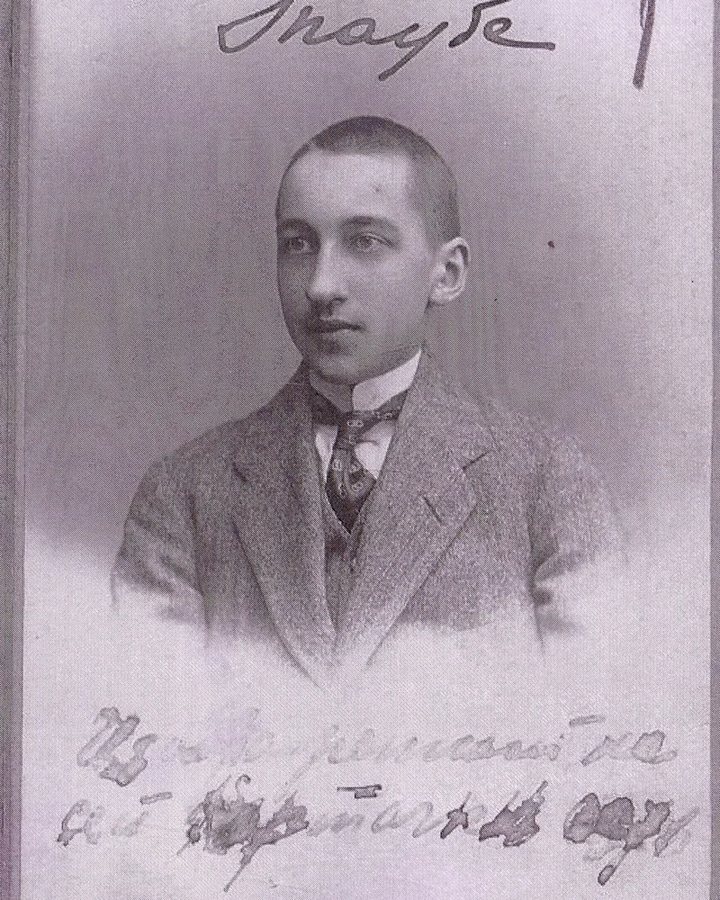 AgapitConfessor · 1894–1936Agapit was an Eastern Orthodox monk and confessor who lived during the transition from the Russian Empire to the Soviet Union. Born Mikhail von Taube in 1894 in Gatchina, he was the son of a baron and studied law at Saint Petersburg University before serving in the military. He later pursued a spiritual path, becoming a monk at the Optina Pustyn monastery. His life was marked by significant hardship, including multiple arrests and periods of exile under the Soviet regime, eventually leading to his death in Oryol in 1936.
- MMiguel Sincelo y ConfesorMiguel Sincelo y Confesor was an Orthodox saint born in Jerusalem around 761. Of Persian descent, he dedicated himself to asceticism and ecclesiastical poetry from a young age. After spending time at the Monastery of Saint Sava, he was appointed as a syncellus by Patriarch Thomas I. His theological involvement in the Filioque controversy and his opposition to iconoclasm led to significant political conflict, resulting in periods of imprisonment and exile under Byzantine emperors.
 Yegor ChekryakovskySaint · 1855–1928Yegor Chekryakovsky, also known as Georgy Kossov, was a Russian Orthodox priest and confessor born in 1855. Raised in the family of a village priest in Androsovo, he later served the community of Spas-Chekryak near Bolkhov until his death in 1928. During his life, he was highly regarded as a starets, a spiritual elder, and was considered the spiritual successor to Amvrosy of Optino. He is recognized for his prophetic abilities, including a prediction regarding the October Revolution.
 Sergius (Srebriansky)Confessor · 1870–1948Sergius (Srebriansky) was an Orthodox Archimandrite and confessor who lived in the Soviet Union during the late 19th and early 20th centuries. Born Mitrofan Vasilyevich Srebriansky in 1870, he initially served as a married priest, even participating in the Russo-Japanese War. Later, following a call to monasticism, he and his wife took vows of celibacy and entered the Martha and Mary Convent. Throughout the Soviet era, he faced multiple arrests and periods of exile, maintaining his religious duties in secret despite intense persecution from the authorities.
- MMartin of AradesSaint · †726Martin of Arades, also referred to as Martin of Corbie, was an 8th-century Frankish Benedictine monk from Corbie Abbey. He held significant positions within the Frankish court, serving as both a chaplain and the personal confessor to the Mayor of the Palace, Charles Martel. Following his death in 726 at Saint-Priest-sous-Aixe, he was recognized as a saint in both the Eastern Orthodox and Roman Catholic traditions.
- SSmaragda1858–1935Smaragda of Nizhyn was an Eastern Orthodox nun and abbess who served the Holy Dormition Convent in Nizhyn. Born Uliana Onyshchenko in 1858, she was raised in a pious family and educated at the monastery's school for orphans. She led the convent during difficult periods of persecution, demonstrating great humility by living in a simple cell despite her leadership role. Her steadfastness during Soviet-era arrests and interrogations earned her recognition as a confessor, a title reflecting her endurance of suffering for her faith.
- IIulitta PetrovskayaBlessed · 1885–1955Iulitta Petrovskaya was an Orthodox blessed confessor who lived during the twentieth century in the Russian Empire and the Soviet Union. Born in the village of Petrove, she married Kirill Pedan and raised four children. She gained a reputation as a spiritual guide among local residents due to her pious lifestyle. During the 1930s, she faced significant persecution from Soviet authorities for her religious activities, which led to multiple arrests and a lengthy prison sentence.
 AelhaearnSaintAelhaearn was a 7th-century Welsh saint and confessor of the British Church. A member of a royal dynasty from the Kingdom of Powys, he was the son of Hygarfael and the brother of saints Llwchaiarn and Cynhaiarn. As a follower of Saint Beuno, he traveled from his homeland toward the Llŷn peninsula. He is primarily remembered for a legendary event in which Beuno purportedly resurrected him after he was killed by wild animals, an incident that supposedly led to the saint's distinctive name.
 Ioann OlenevskiyConfessor · 1854–1951Ioann Olenevskiy was a 20th-century Orthodox confessor and spiritual elder born in 1854 in Olenevka. Despite being ordained as a deacon in 1920, he exercised significant pastoral authority, often providing spiritual guidance to both laypeople and clergy. Throughout his long life, he faced multiple arrests and persecutions by Soviet authorities due to his religious activities. He was eventually ordained as a priest in 1946 at the age of 92. He is recognized as a saint and a confessor of the faith within the Russian Orthodox Church.
- CCelerinus of CartagenaSaint · †258Celerinus of Cartagena was a Christian deacon who lived in Carthage during the Roman Empire. During the reign of Emperor Decius, he was ordained to the diaconate by Saint Cyprian, the Bishop of Carthage. He is recognized as a confessor, having endured hardships for his faith during a period of significant persecution in North Africa.
- AAkhemenid PersidskiySaintAkhemenid Persidskiy was a Persian confessor who lived during the eras of the Byzantine Emperor Theodosius II and the Persian King Yazdegerd. Born into a wealthy and noble family, he chose to embrace Christianity, subsequently renouncing his ancestral traditions and significant riches. His conversion led to intense conflict with the Persian monarch, who attempted to force him back to his original faith through various methods of coercion.
 Apollon Ksenofontovitsj BabitsjevHieromartyr · 1874–1937Apollon Ksenofontovitsj Babitsjev was a Russian psalmodist who lived from 1874 to 1937. Born in Kaluga, he served at the Georgievsky Church in the same city until his arrest during the Soviet repressions of 1937. Despite maintaining a firm stance during interrogations and insisting that his responses be recorded accurately, he was accused of anti-Soviet activities. He was executed alongside several other clergy members and was later recognized as a saint by the Russian Orthodox Church.
- IIoann PsikhaitVenerable monasticIoann Psikhait was a Byzantine monk who lived during the late 8th and early 9th centuries. He entered monastic life at the Psikhait Lavra, located near Constantinople, where he was known for his asceticism. During the period of Iconoclasm, he refused to renounce the veneration of icons and openly criticized Emperor Leo IV the Isaurian for his views. Because of his opposition to the imperial policy, he was sent into exile in Cherson, where he eventually died.
 Roman Miedwiedź1874–1937Roman Miedwiedź was an Eastern Orthodox priest born in Zamość in 1874. After studying at the Saint Petersburg Theological Academy, he served in various capacities, including as an inspector at the Vilna Theological Seminary and as a rector in Sevastopol. Throughout his ministry, he maintained close spiritual ties to prominent figures, including John of Kronstadt. During the Soviet era, he faced significant persecution for his religious convictions, which eventually led to his imprisonment and death in 1937.
- FFeodosiyConfessor · 1860–1937Feodosiy (born Ivan Fedorovich Ganitsky in 1860) was an Eastern Orthodox bishop of the Russian Orthodox Church who served as the Bishop of Kolomna and Bronnitsy. Born into a deacon's family in Ruda, he rose through the monastic ranks to hold various administrative and pastoral roles. He was known for his ascetic lifestyle and his dedication to the spiritual needs of his community. During the early Soviet period, he faced multiple arrests and periods of exile due to his religious activities, eventually dying in 1937.
- DDaigSaint · †588Daig was a 6th-century Irish bishop and confessor who served at Inis-Caoin-Deagha, located in present-day County Monaghan. Born in County Meath to Carill and Dediva, he received his early education at the monastery on Devenish Island before continuing his studies under Saint Comgall at Bangor. Before his leadership roles, he worked as a skilled artisan for Saint Ciarán of Saigir, producing numerous bells, croziers, and Gospels for various Irish monasteries.
 Anastase le VénitienSaintAnastase le Vénitien was an eleventh-century monk, hermit, and theologian born into a prominent Venetian family. After following Guillaume de Volpiano, he lived at Mont-Saint-Michel and on the island of Tombelaine before joining the Abbey of Cluny under Hugh of Semur. Known for his intellectual depth, he was a contemporary of Anselm of Canterbury and is credited by some scholars with early theological writings regarding the Eucharist. He died in Saint-Martin-d'Oydes while traveling between various monastic communities.
- DDmitriy Pavlovich SokolovConfessor · 1872–1943Dmitriy Pavlovich Sokolov was an Orthodox priest and confessor who lived in the Russian Empire and the Soviet Union. Born in 1872, he served as a teacher and later became the rector of the Spaso-Preobrazhensky Cathedral in Uglich. Throughout his ministry, he held various educational roles within the church, including teaching at parish and Sunday schools. His steadfast commitment to his faith led to multiple arrests by Soviet authorities, eventually resulting in a period of exile in the North where he lost his sight.
