 Antoni GaudíServant of God · 1852–1926Antoni Gaudí was a Catalan architect and designer, widely regarded as the greatest exponent of Catalan Modernisme. His works have a distinctive style and are mostly located in Barcelona, including his magnum opus, the Sagrada Família church. Drawing on architecture, nature and religion, he considered every detail of his creations and combined crafts such as ceramics, stained glass, wrought ironwork and carpentry. His work continues to attract global admiration and study.
 Isabella I of CastileServant of God · 1451–1504Isabella I of Castile (1451–1504), also known as Isabella the Catholic, was Queen of Castile and León from 1474 until her death. Through her marriage to Ferdinand II of Aragon, she also became Queen of Aragon from 1479. Reigning together over a dynastically unified Spain, the pair are known as the Catholic Monarchs. Her reign marked the end of the Reconquista and the start of the Spanish Empire, which made Spain a major force in European politics.
 Teresa of ÁvilaSaint · 1515–1582Teresa of Ávila was a 16th-century Spanish mystic, writer, and religious reformer. Born in Ávila, she joined the Carmelite order and later spearheaded a movement of monastic renewal alongside Saint John of the Cross, establishing the Discalced Carmelites. As a prominent figure of the Counter-Reformation, she authored influential spiritual texts, including *The Interior Castle*, which detail her experiences with contemplative prayer and mystical union. Her profound theological contributions led to her being named a Doctor of the Church, the first woman to receive this title.
 Ignatius of LoyolaBlessed · 1491–1556Ignatius of Loyola was a 16th-century Spanish priest, theologian, and soldier who established the Society of Jesus, commonly known as the Jesuits. Born in the Basque region around 1491, he transitioned from a military life to a religious one following a severe leg injury sustained during the Battle of Pamplona. After a period of spiritual reflection, he founded the religious order in Paris in 1541, serving as its first Superior General. His spiritual teachings and emphasis on missionary work and education played a significant role in the Counter-Reformation.
 Francis XavierWonderworker · 1506–1552Francis Xavier was a 16th-century Navarrese cleric and a co-founder of the Society of Jesus. After joining Ignatius of Loyola and several other students in Paris to take vows of poverty and chastity, he became a prominent missionary representing the Portuguese Empire. He traveled extensively across Asia, conducting evangelization efforts in India and leading the first Christian mission to Japan. Known by several titles, including the Apostle of the Indies, he died on Shangchuan Island while attempting to reach China.
 Baudouin I of BelgiumServant of God · 1930–1993Baudouin I of Belgium was the Belgian monarch who reigned from 1951 until his death in 1993. Born in Laeken in 1930, he was the eldest son of King Leopold III and Princess Astrid of Sweden. He assumed the throne following his father's abdication, becoming the last Belgian sovereign to rule over the Congo before its independence in 1960. Throughout his long reign, he remained a significant figure in Belgian history, eventually being recognized by the Catholic Church as a servant of God.
 SiriciusSaint · 334–399Siricius was the bishop of Rome from 384 until his death in 399. A native of Rome and son of Tiburtius, he served the church as a lector and deacon during the reign of Liberius before being elected unanimously to the papacy following the death of Damasus I. He is recognized for his active administration and for issuing the Directa decretal, which remains among the earliest fully preserved papal decrees concerning church discipline and baptismal practices.
 Isidore of SevilleSaint · 560–636Isidore of Seville was a prominent Hispano-Roman scholar and theologian who served as the Archbishop of Seville during the early 7th century. Born in Cartagena around 560, he played a vital role in unifying the Visigothic kingdom by helping convert the ruling class from Arianism to Catholicism. Often described as the final scholar of the ancient world, he worked to preserve classical learning during a period of cultural decline. His extensive writings helped bridge the gap between antiquity and the Middle Ages, ensuring that much classical knowledge was not lost to history.
 Ramon LlullBlessed · 1232–1316Ramon Llull was a 13th-century Majorcan philosopher, theologian, and missionary who sought to bridge religious divides through logic. Born in Palma around 1232, he transitioned from a worldly lifestyle to a religious one following several visions of Christ. He developed a unique logical system called the Art, designed to demonstrate Christian truths using combinatorial principles. A prolific author who wrote extensively in Catalan, Latin, and possibly Arabic, he dedicated his life to missionary work and the promotion of linguistic study to facilitate interfaith dialogue.
 Saint DominicSaint · 1170–1221Saint Dominic was a 13th-century Castilian priest who established the Order of Preachers, commonly known as the Dominicans. Born in Caleruega, he dedicated his life to preaching and combating heresy, particularly the Cathar movement in southern France. After studying theology and serving as a subprior in Osma, he organized a new type of religious community that emphasized systematic education and asceticism. He served as the superior general of his order until his death in Bologna in 1221.
 John of the CrossBlessed · 1542–1591John of the Cross was a 16th-century Spanish priest, poet, and mystic who played a central role in the Counter-Reformation. A member of the Carmelite Order, he worked closely with Teresa of Ávila to establish the Discalced Carmelites, a group dedicated to returning to the original, stricter rules of their order. He is widely celebrated for his profound literary contributions, specifically his poetry and theological studies regarding the soul's journey toward God. Recognized as a Doctor of the Church, he remains a significant figure in Catholic spiritual tradition.
 Bartolomé de las CasasServant of God · 1474–1566Bartolomé de las Casas was a Spanish Dominican friar and theologian who lived from 1484 to 1566. Originally a settler in the Americas who participated in the colonial economy, he later transformed into a prominent defender of Indigenous rights. As a jurist and historian, he documented the brutal treatment of native populations by European conquistadores. He served as the Bishop of Chiapas and was officially recognized as a protector of the Indigenous peoples, dedicating much of his life to advocating for more humane colonial policies before the Spanish court.
 Joseph of AnchietaSaint · 1534–1597Joseph of Anchieta was a 16th-century Spanish Jesuit missionary who played a foundational role in the history of colonial Brazil. Born in the Canary Islands, he traveled to South America to serve the Society of Jesus, where he helped establish the cities of São Paulo and Rio de Janeiro. A gifted linguist, poet, and educator, he is often called the father of Brazilian literature for his early written works. He dedicated much of his life to the religious instruction and pacification of indigenous populations, utilizing his mastery of the Old Tupi language to bridge cultural divides.
 Peter of Saint Joseph BetancurSaint · 1626–1667Peter of Saint Joseph Betancur was a 17th-century Spanish missionary who dedicated his life to serving the marginalized in Guatemala. Born in Vilaflor on Tenerife, he spent his early years working as a shepherd before traveling to the Americas at age 23. Although he initially sought the priesthood, he instead became a Franciscan tertiary and focused his ministry on the poor, the sick, and prisoners. He is recognized as the first saint from the Canary Islands and a foundational religious figure in Central America.
 Blanche of Castile1188–1252Blanche of Castile was a 13th-century queen of France and a highly influential political leader. Born in Palencia, Spain, she married Louis VIII and later served as regent on two separate occasions during the reign of her son, the future saint Louis IX. During her periods of regency, she managed significant challenges, including suppressing noble rebellions, organizing military campaigns, and negotiating crucial diplomatic treaties. Beyond her political achievements, she was a composer and a dedicated patron of religious and cultural works.
 Ferdinand III of CastilleSaint · 1199–1252Ferdinand III of Castille was a 13th-century monarch who ruled Castile, León, and Galicia. Born in Zamora, he successfully united the crowns of Castile and León following the death of his father, Alfonso IX. He is primarily remembered for his significant territorial expansions during the Reconquista, where he captured major cities such as Córdoba and Seville. Due to his military successes against the Almohad Caliphate, Pope Gregory IX granted him the title *Athleta Christi*. He was later canonized by the Catholic Church in 1671.
 Josemaría EscriváBlessed · 1902–1975Josemaría Escrivá (1902–1975) was a Spanish priest and theologian who established Opus Dei, an organization focused on helping laypeople and clergy achieve holiness through their daily professional and secular activities. Born in Barbastro, he studied law and theology, eventually moving to Rome in 1946. His teachings emphasized the spiritual value of ordinary work, a concept that gained significant recognition during the Second Vatican Council. He was canonized as a saint by Pope John Paul II in 2002.
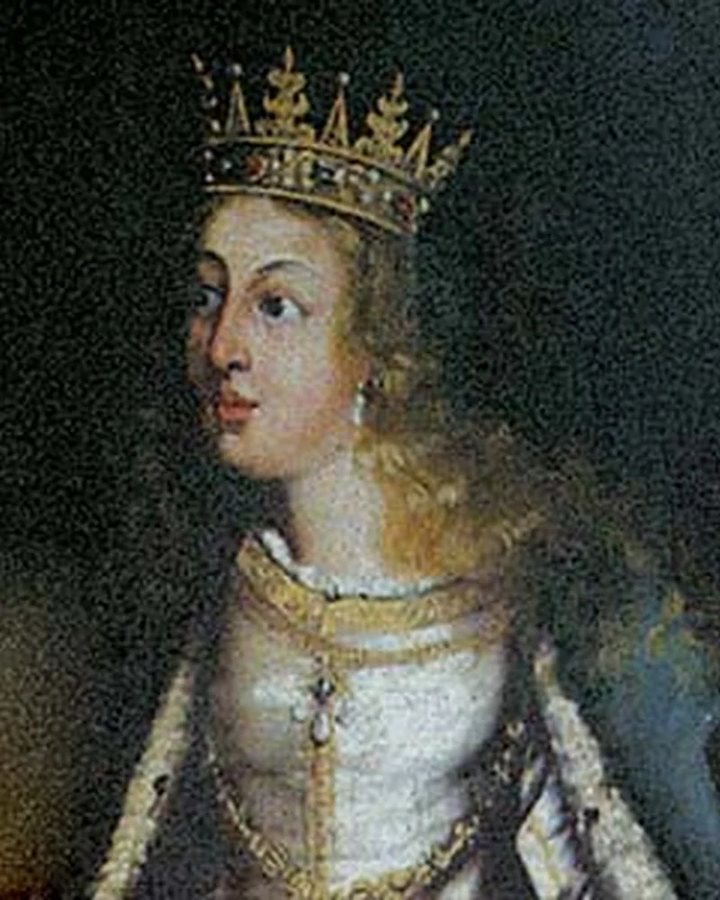 Elizabeth of AragonSaint · 1271–1336Saint. Feast day: 4 July.
 John of ÁvilaSaint · 1499–1569John of Ávila was a 16th-century Spanish priest and mystic known for his extensive missionary work in Andalusia. Born in Almodóvar del Campo, he studied law and theology at the universities of Salamanca and Alcalá de Henares. Though he originally intended to serve as a missionary in Mexico, he remained in Spain to revitalize the faith in southern regions. Recognized as a Doctor of the Church, he was a significant influence on the early development of the Jesuits and was celebrated for his powerful preaching and commitment to clerical reform.
 Vincent FerrerSaint · 1350–1419Vincent Ferrer was a prominent Dominican friar, missionary, and logician who lived from 1350 to 1419. Born in Valencia, he joined the Order of Preachers at eighteen and eventually earned a doctorate in theology. He became a widely recognized preacher throughout Western Europe, including the British Isles, known for a rhetorical style that blended traditional scholasticism with a more direct, popular tone. During the Western Schism, he supported Benedict XIII, though he later sought to resolve the division within the Church. He died in Vannes, France.
 Mary of Jesus de León y DelgadoServant of God · 1643–1731Mary of Jesus de León y Delgado was a 17th-century Spanish mystic and Dominican lay sister from the Canary Islands. Born in El Sauzal in 1643, she entered a Dominican convent in 1668. She spent much of her life in San Cristóbal de La Laguna, where she was known for her visionary experiences. During her life, she reportedly experienced phenomena such as levitation, bilocation, and stigmata near her heart. She died in 1731 and is currently recognized as a Servant of God.
 Francis Borgia, 4th Duke of GandíaSaint · 1510–1572Francis Borgia was a sixteenth-century Spanish nobleman, politician, and Jesuit priest. Born in Gandía in 1510, he initially held high-ranking positions, including serving at the imperial court of Charles V and acting as the Viceroy of Catalonia. After inheriting the title of fourth Duke of Gandía and marrying Leonor de Castro Mello y Meneses, he eventually renounced his worldly titles to join the Society of Jesus. He later rose to become the third Superior General of the order, dedicating his life to religious service until his death in Rome in 1572.
 Hosius of CordubaSaint · 256–357Hosius of Corduba was a prominent 4th-century bishop from Hispania who served as a key advisor to Emperor Constantine the Great. As a leading figure during the Arian controversy, he was a staunch defender of homoousion Christianity. He participated in several significant ecclesiastical gatherings, most notably presiding over the First Council of Nicaea. Throughout his long career, he maintained significant influence within the Roman Empire, eventually facing exile in Sirmium due to his refusal to yield to imperial pressure regarding church doctrine.
 Vincent of SaragossaSaint · 300–304Vincent of Saragossa was a 4th-century deacon from Huesca who served the Church in Zaragoza. Acting as a spokesman for Bishop Valerius, he became a prominent figure during the persecutions under Emperor Diocletian. He was eventually arrested and taken to Valencia, where he refused to renounce his faith despite severe torture. Recognized as a protomartyr of Spain, he is honored across various Christian traditions, including Catholic, Anglican, and Orthodox churches.
 Maria Luisa I, Duchess of LuccaBlessed · 1782–1824Maria Luisa I, Duchess of Lucca was a Spanish infanta and member of the royal family of Spain. Born in 1782 at the Royal Palace of San Ildefonso, she married her cousin Louis of Bourbon-Parma in 1795. Following her husband's death in 1803, she served as regent for their son in the Kingdom of Etruria. After years of exile and political shifts caused by Napoleon, she eventually ruled the Duchy of Lucca. She is recognized as a blessed in the Catholic tradition.
 Constance of SicilyBlessed · 1248–1302Constance of Sicily was a 13th-century queen who held titles in both Aragon and Sicily. Born in Catania to King Manfred, she married Peter III of Aragon in 1262. Following her father's death, she maintained a claim to the Sicilian throne, which she eventually ruled alongside her husband from 1282 until 1285. After the passing of her husband, she entered the religious life, joining the Poor Clares. She died in Barcelona in 1302 and is recognized as a blessed in the Catholic tradition.
 Aelia FlaccillaSaint · 356–386Aelia Flaccilla was a 4th-century Roman empress and the first wife of Emperor Theodosius I. Born in Hispania, she rose to the rank of Augusta following her husband's elevation to the throne. She was the mother of two future emperors, Arcadius and Honorius, as well as a daughter named Pulcheria. Throughout her life in the Byzantine Empire, she was recognized for her deep commitment to the Nicene faith and her dedication to charitable works in Constantinople.
 Raymond of PenyafortSaint · 1175–1275Raymond of Penyafort was a 13th-century Dominican friar and influential canon lawyer. Born in Santa Margarida i els Monjos, he studied in Barcelona and Bologna, eventually earning doctorates in both civil and canon law. He served as the Master General of the Order of Preachers and held significant ecclesiastical roles, including serving as a grand penitentiary. He is most renowned for his massive contribution to legal history through the compilation of the Decretals of Gregory IX, a foundational collection of church laws that remained authoritative for centuries.
 Álvaro del PortilloBlessed · 1914–1994Álvaro del Portillo was a Spanish civil engineer and Catholic bishop who served as the second prelate of Opus Dei from 1982 until his death in 1994. Born in Madrid in 1914, he joined Opus Dei in 1935 and was later ordained a priest in 1944. Throughout his ecclesiastical career, he held significant roles, including serving as a secretary and peritus during the Second Vatican Council. He was eventually consecrated as a titular bishop by Pope John Paul II.
 Joseph CalasanzSaint · 1556–1648Joseph Calasanz was a 16th-century Spanish priest and educator who dedicated his life to providing free schooling to underprivileged children. Born in the Kingdom of Aragon, he studied law and theology before moving to Rome in 1592. There, he established the first free public school in Europe, which eventually led to the founding of the Piarist religious order. Known for his commitment to teaching both literacy and religious instruction, he remained in Rome for most of his adult life, where he also provided aid during times of plague and natural disasters.
