 Søren Kierkegaard1813–1855Søren Kierkegaard was a 19th-century Danish philosopher, theologian, and poet who lived in Copenhagen. Often recognized as the founder of existentialism, his work focused on the importance of the individual, personal choice, and authentic living. He frequently utilized irony, parables, and metaphors to explore complex themes regarding morality, ethics, and the human psyche. Unlike later atheistic existentialists, Kierkegaard's thought was deeply rooted in Christian principles, emphasizing a subjective relationship with God and criticizing the state-controlled religious institutions of his era.
 Harald BluetoothSaint · 911–985Harald Bluetooth was a 10th-century monarch who ruled Denmark and held a tenuous hold over Norway. As the son of Gorm the Old and Thyra Dannebod, he consolidated power across much of Jutland and Zealand. He is most notably remembered for introducing Christianity to the Danish people and for his extensive infrastructure projects, including the construction of ring fortresses and major bridges. His reign ended when he was deposed by his son, Swein Forkbeard, leading to his death shortly thereafter.
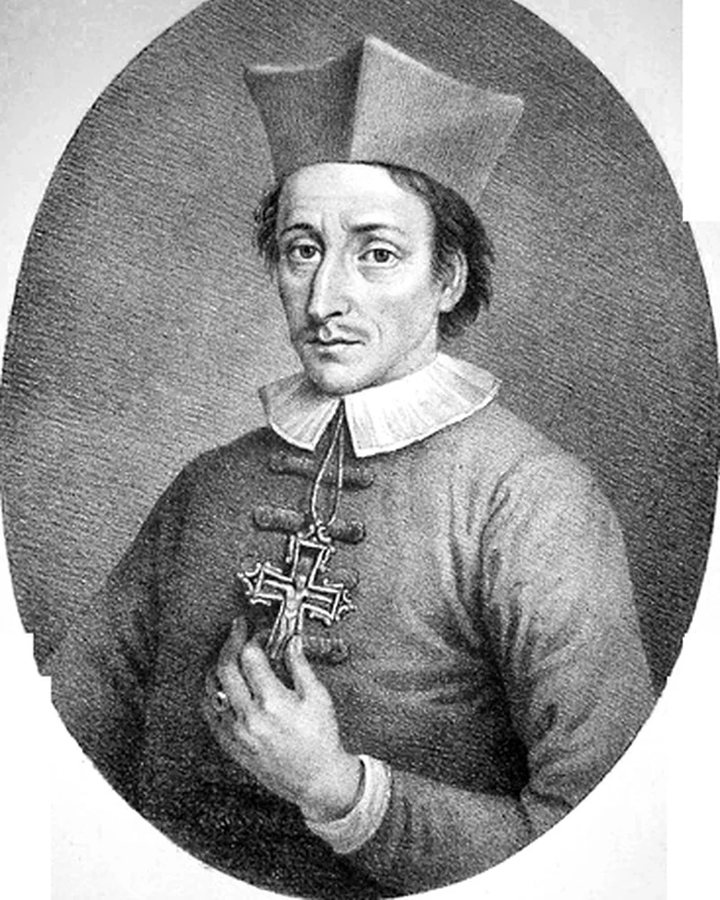 Nicolas StenoBlessed · 1638–1686Nicolas Steno was a 17th-century Danish polymath who made foundational contributions to anatomy and geology before entering the Catholic priesthood. Born in Copenhagen, he traveled extensively through Europe, studying medicine and natural sciences in the Netherlands, France, and Italy. His scientific observations, including the discovery of the parotid salivary gland duct and his research into fossil formation, established him as a pioneer of modern stratigraphy. Later in life, he converted from Lutheranism to Catholicism, eventually serving as a titular bishop and the Apostolic Vicar of Nordic Missions.
 Nikolaj Frederik Severin Grundtvig1783–1872Nikolaj Frederik Severin Grundtvig was a highly influential Danish theologian, poet, and politician who lived from 1783 to 1872. Born in Udby, he became a central figure in Danish cultural history by blending deep spirituality with a unique form of nationalism rooted in Nordic traditions. Throughout his diverse career, he served as a pastor, a historian, and a member of the Danish Constituent Assembly. His intellectual contributions helped shape modern Danish national consciousness through his extensive writings and his significant impact on the country's religious and political landscape.
 Eric IV of DenmarkSaint · 1216–1250Eric IV of Denmark, also known as Eric Ploughpenny, was the monarch of Denmark who reigned from 1241 until 1250. Born in Copenhagen around 1216 to Valdemar II, he had previously served as the Duke of Schleswig starting in 1218. His rule was marked by significant tension with his brother, Abel of Schleswig, and his controversial decision to levy taxes on those owning ploughs. This fiscal policy earned him his distinctive nickname before his life ended prematurely in Schlei.
 AnsgarSaint · 801–865Ansgar was a 9th-century Benedictine missionary and archbishop who served the sees of Hamburg and Bremen. Born near Amiens to a noble Frankish family, he was educated at the monastery of Corbie. He is widely recognized as the "Apostle of the North" due to his extensive efforts to spread Christianity throughout Scandinavia, including Denmark, Norway, and Sweden. Despite facing political instability and Viking raids that destroyed his resources, he remained a dedicated figure in the northern evangelization efforts during the Carolingian era.
 Canute IV of DenmarkSaint · 1043–1086Canute IV of Denmark was a monarch who ruled his kingdom from 1080 until his death in 1086. A deeply religious leader, he worked to strengthen the authority of the Danish monarchy and the Roman Catholic Church through the enforcement of tithes and significant donations to various religious institutions. His ambitious efforts to expand royal power and his pursuit of the English throne created friction with the nobility and his subjects. This tension eventually culminated in a peasant revolt that led to his violent death in a church in Odense.
 Jacob Riis1849–1914Jacob Riis was a Danish-born journalist and photographer who became a prominent social reformer in the United States during the late 19th and early 20th centuries. After emigrating from Denmark in 1870, he experienced extreme poverty in New York City, which later informed his investigative work. By documenting the squalid living conditions of the urban poor through photography and writing, he sought to inspire the middle and upper classes to support housing reforms and improve the lives of those living in crowded tenements.
 Charles I, Count of FlandersSaint · 1084–1127Charles I, Count of Flanders was a 12th-century ruler who governed Flanders from 1119 until his assassination in 1127. Born in Denmark to King Canute IV and Adela of Flanders, he was raised in the Flemish court following his father's death. During his reign, he was noted for his charitable efforts to combat famine, including distributing food and suppressing grain hoarding. His sudden murder by a group of knights during Mass at St. Donatian's Cathedral led to his immediate recognition as a martyr.
 Canute LavardSaint · 1096–1131Canute Lavard was a 12th-century Danish prince and the inaugural Duke of Schleswig. Born in Roskilde around 1096, he served as a crucial border ruler, holding vassalage under both the Danish crown and the Holy Roman Empire. His efforts to maintain peace in the borderlands earned him significant influence, though his political standing made him a target for rivals. He was eventually murdered in the Haraldsted Forest by his cousin, Magnus the Strong, in 1131. He is remembered as a progenitor of the Valdemarian royal line.
 Johannes Bugenhagen1485–1558Johannes Bugenhagen was a prominent 16th-century German theologian and Lutheran priest who played a vital role in spreading the Reformation throughout Northern Germany and Scandinavia. A close companion of Martin Luther, he served as the pastor at St. Mary's Church in Wittenberg and acted as Luther's confessor. He is widely recognized for his ability to translate theological concepts into practical social legislation and church organization. Due to his extensive work establishing religious structures across various territories, he earned the title "Second Apostle of the North."
 Kaj Munk1898–1944Kaj Munk was a Danish Lutheran pastor and prolific playwright who lived from 1898 to 1944. Born on the island of Lolland, he served as a vicar in Vedersø for much of his adult life. He gained prominence through his literary works, which often addressed religious and philosophical debates. During the German occupation of Denmark, Munk became a vocal critic of Nazism, using his sermons and plays to oppose collaboration. His resistance led to his arrest and murder by the Gestapo in January 1944, making him a martyr for his convictions.
 William of ÆbelholtSaint · 1127–1203William of Æbelholt was a French-born churchman who served as a bishop and abbot in Denmark during the 12th century. Born in Paris to a noble family, he was educated by his uncle at Saint-Germain-des-Prés before moving to Denmark in 1165 at the request of Bishop Absalon. He played a vital role in reforming monastic life in the region, eventually moving his community to Æbelholt. Beyond his monastic work, he acted as a diplomatic link between the Danish and French courts, notably assisting in royal marriage disputes.
 Oswald of WorcesterSaint · †992Oswald of Worcester was a 10th-century Benedictine monk who served as the Archbishop of York and the Bishop of Worcester. Born into a Danish family, he was educated at the abbey of Fleury in France before returning to England to pursue an ecclesiastical career. A key figure in the monastic reforms of his era, he worked alongside Archbishop Dunstan to restore religious discipline. He is remembered for founding several monasteries, most notably Ramsey Abbey, and for his commitment to the Benedictine rule throughout his leadership.
 Kjeld of ViborgSaint · †1150Kjeld of Viborg was a 12th-century Danish clergyman who served as a canon and provost. Born to wealthy parents near Randers, he studied in Lübeck before joining the Augustinian canons at Viborg Cathedral. He eventually rose to become the dean of the canons, though his extreme generosity toward the poor caused friction with his colleagues. After a pilgrimage to Rome to seek permission for missionary work, he returned to Viborg, where he died in 1150.
- TTheodgar of VestervigSaint · †1065Theodgar of Vestervig was a German missionary from Thuringia who dedicated his life to spreading the Christian faith. After completing his theological studies in England, he traveled to Norway to serve at the court of King Olav II Haraldsson. Following the death of the king, he moved to the Jutland peninsula in Denmark. He remained active in his missionary work there until his death, which occurred around June 24, 1065.
- MMargrethe af HøjelseSaint · †1176Margrethe af Højelse was a Danish woman who lived during the 12th century and is recognized as a local saint in the Roman Catholic tradition. A relative of Bishop Absalon of Roskilde, she was married to a man named Herlog. Her life ended violently in 1176 when her husband murdered her and attempted to frame the death as a suicide by hanging her body. Following the discovery of miracles at her burial site, her true fate was revealed, leading to her recognition as a holy figure.
- NNiels of AarhusSaint · †1180Niels of Aarhus was a Danish prince, the illegitimate son of King Canute V, who chose to live an ascetic life. Rather than remaining at the royal court, he moved to the village of Skibby near Aarhus to build a church and assist the local population. He is remembered for his piety and for a spring that reportedly appeared following his prayers. Although he was never formally canonized, he was venerated as a saint in the Aarhus region for several centuries.
 VilhelmSaint · †1074Vilhelm was a Danish prelate who served as the Bishop of Roskilde from approximately 1060 until his death in 1074. While his early life remains uncertain, historical accounts offer differing views on his origins, with some suggesting German roots through his service to the Archbishop of Bremen and others claiming an Anglo-Saxon background. During his leadership, he is credited with beginning the construction of Roskilde Cathedral, a project later finished by his successor.
- HHenry of Coquet†1127Henry of Coquet was a Danish nobleman who became an anchorite in the early 12th century. After reportedly receiving a divine vision, he fled an arranged marriage to dedicate his life to religious service. He eventually settled on Coquet Island, located off the coast of Northumberland, where he built a small cell with the permission of the prior of Tynemouth. He remained in this hermitage until his death in 1127.
 Sankt Villehad af Danmark1482–1572Villehad of Denmark was a Danish Catholic priest and a member of the Franciscan order who lived from 1482 to 1572. He is recognized as one of the Martyrs of Gorkum, a group of nineteen clerics executed during the Dutch Revolt. Having fled his homeland to escape religious persecution, he was eventually captured by the Watergeuzen in the Netherlands. He chose to face death rather than renounce his Catholic faith, becoming a significant figure of martyrdom during the religious conflicts of the 16th century.
- SSissela av BorrbySaintSissela av Borrby was a legendary female saint from the Scania region, one of three women from this area recognized as saints. While she is venerated as a saint, there is no historical evidence to confirm her existence as a real person. Local folklore, recorded in the 19th century, connects her name to a spring in Borrby, located in southeastern Scania, which is often referred to as Saint Sissela's or Saint Cecilia's spring.
- RRasmus Jensen†1620Rasmus Jensen was a Danish Lutheran clergyman who participated in a 1619 expedition to search for the Northwest Passage. Serving under the authority of King Christian IV, he traveled aboard the ships *Enhiørningen* and *Lamprenen*. He is recognized as the first Lutheran cleric to reach what is now Canada, having arrived at the Churchill River in Manitoba. During the harsh winter, he endured significant hardships, including scurvy and famine, before passing away on February 20, 1620.
