 Baudouin I of BelgiumServant of God · 1930–1993Baudouin I of Belgium was the Belgian monarch who reigned from 1951 until his death in 1993. Born in Laeken in 1930, he was the eldest son of King Leopold III and Princess Astrid of Sweden. He assumed the throne following his father's abdication, becoming the last Belgian sovereign to rule over the Congo before its independence in 1960. Throughout his long reign, he remained a significant figure in Belgian history, eventually being recognized by the Catholic Church as a servant of God.
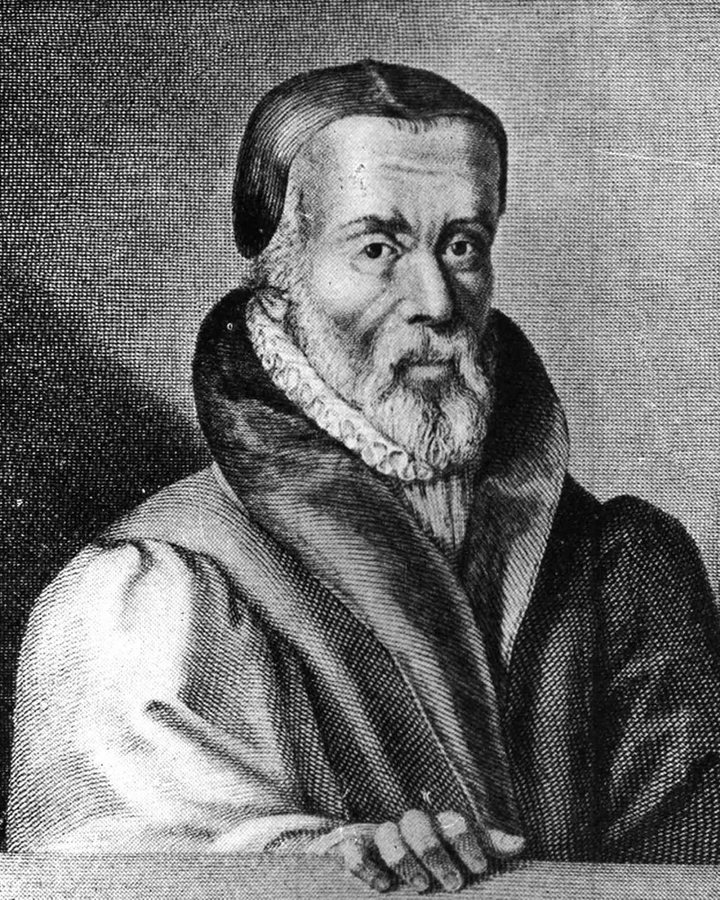 William Tyndale1494–1536William Tyndale was an English theologian, linguist, and prominent figure of the Protestant Reformation. Born around 1494 in Gloucestershire, he became a pioneering translator by producing English scriptures derived directly from original Hebrew and Greek texts. His work utilized the printing press to reach a wider audience, marking a significant shift in religious accessibility. Because his translations and theological writings, such as *The Obedience of a Christian Man*, challenged existing ecclesiastical authority, he faced intense opposition from both the state and the church, eventually leading to his execution in 1536.
 Peter the HermitVenerable · 1050–1115Peter the Hermit was a French priest and preacher who became a central figure in the People's Crusade of 1096. Born in Amiens around 1050, he gained fame as an emotional revivalist, recruiting thousands of peasants and serfs for an armed pilgrimage to Jerusalem. His followers, often referred to as the Crusade of the Paupers, traveled through Europe toward the Levant. While he played a role in the subsequent military successes of the First Crusade, his earlier leadership was marked by significant violence and heavy losses during the journey toward Constantinople.
 Edith Cavell1865–1915Edith Cavell was a British nurse and peace activist who lived in the late 19th and early 20th centuries. While working in Belgium, she became a pioneer of modern nursing and served as a matron for a nursing school in Brussels. During the First World War, she provided medical care to wounded soldiers from all sides and assisted approximately 200 Allied soldiers in escaping German-occupied territory. Her efforts to help these individuals led to her arrest and subsequent execution by a German firing squad in 1915.
 Pepin of LandenSaint · 585–640Pepin of Landen was a 7th-century political leader who served as the Mayor of the Palace in Austrasia. Born around 585, he rose to prominence as a powerful baron during the Merovingian era, eventually serving under King Dagobert I and later Sigebert III. Known as the Elder, he was a central figure in the Pippinid family, which would later play a significant role in Frankish history. He was recognized for his wise governance and influential counsel until his death in 640.
 Father DamienBlessed · 1840–1889Blessed, missionary. Feast day: 10 May.
 HubertusSaint · 655–727Hubertus was a Frankish bishop who lived during the late 7th and early 8th centuries. Born in Toulouse to a noble family, he initially served at royal courts before undergoing a spiritual transformation. Following the death of his wife, he sought solitude in the Ardennes forests. He is famously remembered for a vision involving a stag with a crucifix between its antlers, an event that led him to renounce his worldly status. He eventually served as the bishop of Maastricht and became the first bishop of Liège.
 Charles I, Count of FlandersSaint · 1084–1127Charles I, Count of Flanders was a 12th-century ruler who governed Flanders from 1119 until his assassination in 1127. Born in Denmark to King Canute IV and Adela of Flanders, he was raised in the Flemish court following his father's death. During his reign, he was noted for his charitable efforts to combat famine, including distributing food and suppressing grain hoarding. His sudden murder by a group of knights during Mass at St. Donatian's Cathedral led to his immediate recognition as a martyr.
 Gertrude of NivellesSaint · 626–659Gertrude of Nivelles was a 7th-century Benedictine abbess born in Landen to the nobleman Pepin of Landen and Itta of Metz. Following her refusal of a royal marriage proposal at age ten, she entered religious life after her father's death. Alongside her mother, she established the Abbey of Nivelles in what is now Belgium. She served as the leader of this monastic community until her death in 659, dedicating her life to spiritual service rather than the political alliances common to her noble lineage.
 John of RuysbroeckBlessed · 1293–1381John of Ruysbroeck was a 14th-century mystic, theologian, and Augustinian canon from the Duchy of Brabant. Born in Ruisbroek, he was ordained a priest in 1318 and served as a parish priest in Brussels before moving to the hermitage of Groenendaal in 1343. He was a significant figure in medieval mysticism, known for his contemplative life and his efforts to address contemporary heresies through his writings. He composed his major works in Middle Dutch to reach a broader audience, rather than using the traditional Latin of the Church.
 DymphnaWonderworker · 700–700Dymphna was a 7th-century Irish saint who is venerated in both Catholic and Eastern Orthodox traditions. Born to a petty king named Damon, she reportedly fled her home in Ireland to escape her father's unwanted advances following the death of her mother. She sought refuge in Geel, located in present-day Belgium, where she was eventually martyred by her father. Recognized as a wonderworker, she is widely honored as the patron saint of individuals suffering from mental illness.
 Adela of FranceBlessed · 1009–1079Adela of France was an 11th-century noblewoman who served as the duchess of Normandy and the countess of Flanders. Born in Paris to King Robert II, she married Baldwin V in 1028. Throughout her life, she exerted significant political influence, co-signing numerous official charters and acting as a regent of France between 1060 and 1067. Later in life, she embraced a religious path, eventually becoming a Benedictine nun in Rome before retiring to a convent in Messines.
 Arnulf, Count of HollandSaint · 951–993Arnulf, Count of Holland was a tenth-century ruler who governed Frisia, a territory that later became the county of Holland. Born in Ghent in 951 to Dirk II and Hildegard of Flanders, he succeeded his father as count in 988. During his career, he expanded his lands southward and traveled to Rome alongside Emperor Otto II. His reign ended in 993 following a military conflict with the West Frisians, which resulted in his death near Winkel.
 BeggaSaint · 615–693Begga was a 7th-century Frankish abbess and a member of the Carolingian lineage. Born in Landen around 615, she was the daughter of Pepin of Landen and Itta, and the elder sister of Gertrude of Nivelles. Following a pilgrimage to Rome, she entered religious life and established seven churches in Andenne. As the grandmother of Charles Martel, she occupied a significant position within the influential ruling family of the era.
 John BerchmansSaint · 1599–1621John Berchmans was a 17th-century Belgian Jesuit scholastic and theologian who lived from 1599 to 1621. Born in Diest, he joined the Society of Jesus despite his father's initial opposition to his religious vocation. He pursued his studies in Mechelen and later in Rome, where he was recognized for his profound philosophical clarity. His life was marked by a deep devotion to the Virgin Mary and a desire for martyrdom. He died in Rome at the young age of 22 after falling ill during a period of academic discussion.
 Saint BavoVenerable monastic · 589–654Saint Bavo was a 7th-century Frankish nobleman who underwent a profound spiritual transformation. Born near Liège to an aristocratic family, he initially lived an undisciplined life as a soldier and married with a daughter. Following the death of his wife, a sermon by Saint Amand prompted him to abandon his material wealth. He subsequently dedicated himself to missionary work and later lived as a recluse, eventually establishing an abbey in Ghent where he spent his final years.
- RRimbertSaint · 830–888Rimbert was a 9th-century Benedictine monk and the Archbishop of Hamburg-Bremen, serving from 865 until his death in 888. Born in Flanders, he served as a missionary alongside his mentor, Ansgar, traveling to Scandinavia to spread the Christian faith. He is most widely recognized for his literary contribution, the *Vita Ansgari*, a significant hagiography of the Middle Ages. As an archbishop, he managed the financial stability of his see and led military efforts against Viking incursions in East Frisia.
 Saint ServatiusSaint · †384Saint Servatius was a 4th-century bishop of Tongeren who was born in Armenia. A prominent diplomat and church leader, he participated in several important ecclesiastical councils, including the Council of Sardica, where he defended Trinitarian views against Arianism. He served as an envoy to the Roman emperor Constantius II and is traditionally credited with founding early Christian churches in his diocese. He died in Maastricht in 384 and is venerated as a saint in the Catholic and Orthodox traditions.
 Julie BilliartSaint · 1751–1816Julie Billiart was a French Catholic nun and educator who lived from 1751 to 1816. Born in Cuvilly, she spent twenty-two years bedridden due to paralysis, during which time she was known for her deep prayer life and embroidery. Following the French Revolution, she fled to Compiègne, where she experienced a vision regarding the future establishment of a religious community. Alongside Françoise Blin de Bourdon, she founded the Sisters of Notre Dame in 1804, an organization dedicated to the education of young girls. She is recognized as a saint in the Catholic Church.
 Lambert of MaastrichtSaint · 635–705Lambert of Maastricht was a 7th-century bishop who served the see of Maastricht-Liège from approximately 670 until his death around 705. Born into a noble family in Maastricht, he was educated by the archpriest Landoald and later rose to his episcopal position following the death of his predecessor, Theodard. During a period of intense political transition between the Merovingian and Carolingian dynasties, Lambert became a victim of the era's violent power struggles. He is remembered as a martyr for his refusal to remain silent regarding the illicit relationship of Pepin of Herstal.
- HHadewijch1200–1260Hadewijch was a 13th-century mystic and poet from the Duchy of Brabant, likely born in Antwerp around 1200. As a member of the Beguine movement, she served as a spiritual leader for a community of women, though she also lived a wandering life following periods of opposition. Her extensive literary output, composed primarily in a Brabantian form of Middle Dutch, includes visions, prose letters, and various poetic forms. She is recognized as a significant figure in medieval Dutch literature and a major influence on the mystic John of Ruysbroeck.
 William of St-ThierryBlessed · 1075–1148William of St-Thierry was a twelfth-century theologian and mystic born in Liège. After entering the monastery of St. Nicaise in Reims, he eventually served as the abbot of Saint-Thierry. He maintained a close, lifelong friendship with Bernard of Clairvaux, who encouraged his leadership despite William's personal desire to join the Cistercian Order earlier. Later in life, following periods of illness, he joined the Cistercians at Signy-l'Abbaye. He is recognized as a blessed figure in the Catholic tradition for his profound spiritual insights and theological contributions.
- IItta of MetzSaint · 592–652Itta of Metz was a 7th-century Frankish noblewoman and saint who lived in Austrasia. As the wife of Pepin of Landen, the Mayor of the Palace, she occupied a high social position before dedicating herself to religious life. Following the death of her husband, she established the Abbey of Nivelles, which functioned as a double monastery for monks and nuns. Serving as an abbess within this Benedictine community, she played a significant role in the spiritual development of her family and the region.
 LutgardisSaint · 1182–1246Lutgardis was a 13th-century Benedictine and Cistercian nun from the Low Countries. Born in Tongeren in 1182, she entered a Benedictine monastery at age twelve. After experiencing religious visions, she transitioned to the stricter Cistercian order at Aywières. She is recognized as a significant mystic, particularly noted for her early visions regarding the Sacred Heart of Jesus. Throughout her life, she was known for her intense devotion, her support of the early Dominican and Franciscan orders, and her various spiritual ecstasies. She died in 1246 at the age of 64.
 Saint AmandusSaint · 600–676Saint Amandus was a 7th-century missionary bishop who played a significant role in evangelizing the Merovingian kingdoms. Born in Bas-Poitou, he chose a monastic life at a young age, eventually serving as a bishop of Tongeren-Maastricht. His extensive missionary travels took him through Flanders, the Danube valley, and the Basque country. Throughout his career, he founded numerous monasteries, including sites in Ghent and near Tournai, and acted as a key advisor to various Frankish rulers while organizing church councils to implement Roman decrees.
 GudulaSaintGudula was a 7th-century Christian saint born in the Brabant region of present-day Belgium. The daughter of a Lotharingian duke and Saint Amalberga, she was raised at Nivelles Abbey under the guidance of her godmother, Gertrude. Following her education, she lived in Moorsel, where she dedicated herself to religious devotion and providing alms to the poor. She died around 712 and was eventually interred in Hamme, though her remains were later moved to Brussels, where they became central to the city's religious identity.
 Albert of LouvainSaint · 1166–1192Albert of Louvain was a 12th-century cardinal and the Prince-Bishop of Liège. Born in 1166 to the Count of Leuven, he was educated at the cathedral school in Liège. After briefly renouncing his clerical status to become a knight following the fall of Jerusalem, he returned to the church and eventually rose to high ecclesiastical office. His tenure as bishop was marked by political disputes regarding his election, which he eventually resolved through an appeal to the Pope in Rome.
 Juliana of LiègeSaint · 1193–1258Juliana of Liège was a 13th-century Premonstratensian canoness and mystic born in Retinne, in the Prince-Bishopric of Liège. After being orphaned at five, she entered the religious life at Mont-Cornillon, where she later served as prioress. She is most famously recognized for her spiritual visions regarding the Eucharist, which inspired the establishment of the Feast of Corpus Christi. Throughout her life, she faced significant political and religious turmoil, leading her to seek refuge in several different religious communities before her death in Fosses-la-Ville.
 Maternus of CologneSaint · 300–328Maternus of Cologne was a fourth-century Christian bishop who served as the first documented leader of the see in Cologne. He is also recognized as the third bishop of Trier and the founder of the diocese of Tongeren. Active during the era of the Donatist controversy, he participated in significant ecclesiastical gatherings, including the Synod of Arles in 314 and a meeting in Rome in 313 called by Emperor Constantine. His work was instrumental in spreading the Christian faith throughout Alsace and Western Germany.
 Edgardo MortaraBlessed · 1851–1940Edgardo Mortara was a 19th-century Catholic priest whose childhood became a major international controversy. Born to a Jewish family in Bologna, he was taken from his parents by the Papal States authorities in 1858. This seizure occurred after a domestic worker claimed to have performed an emergency baptism on him as an infant. Raised within the Church under the protection of Pope Pius IX, Mortara eventually entered religious life. He later served as a member of the Augustinians and the Canons Regular of the Lateran, spending much of his adult life outside of Italy.
